

What does a crawl space vapor barrier do?
It covers the bare soil under your house, so moisture from the ground stays down instead of rising into the crawl space air. The space also stays cleaner and easier to check later.
A vapor barrier is heavy plastic sheeting laid over the soil and wrapped around the piers that hold up the floor. It doesn’t change the soil underneath. It puts a layer between that soil and everything above it: the framing, the insulation, the ducts and, in the end, the air in your home.
Do Bay Area homes need a vapor barrier?
Many do. Lots of older Bay Area homes sit on raised foundations with a dirt crawl space underneath, and bare soil holds moisture, especially after winter rains.
Homes in cooler, foggier spots near the bay tend to stay damper under the floor. A home inspector often flags a crawl space with bare dirt or old, torn plastic, and that is a common reason homeowners call. Signs worth acting on:
- Damp or dark patches on the soil.
- Old sheeting that only covers part of the ground, or is torn and dirty.
- Wood framing under the house that looks damp or stained.
- A musty smell in the rooms above.
If smell is the main problem, read why a crawl space smells first: the cause is not always moisture.
What is the difference between a vapor barrier and encapsulation?
A vapor barrier covers the ground. Encapsulation goes further: it usually seals the crawl space walls and vents as well, and often adds a dehumidifier, turning the space into a closed one.
They are different approaches. We install vapor barriers over the soil, wrapped around the piers, and keep the foundation vents open and screened with galvanized steel mesh, so the crawl space can still breathe while animals stay out. For many Bay Area crawl spaces, covering the soil and keeping them clean is the practical fix.
Can I install a vapor barrier myself?
In a small, clean crawl space with plenty of room to move, a handy homeowner can. In most real crawl spaces it is a harder job than it looks.
What makes it hard:
- Low clearance: the work is done lying down, dragging heavy rolls of sheeting.
- Debris first: old plastic, wood scraps and fallen insulation have to come out, or the new barrier won’t lie flat.
- Droppings: if rodents have been under the house, the CDC says not to sweep or vacuum droppings, and to soak them with disinfectant before cleanup.
- The piers: wrapping each pier neatly takes time and care.
- Ducts and pipes: working around them without damaging them.
A barrier laid over debris, droppings or open vents only covers the problem.
What makes a good vapor barrier installation?
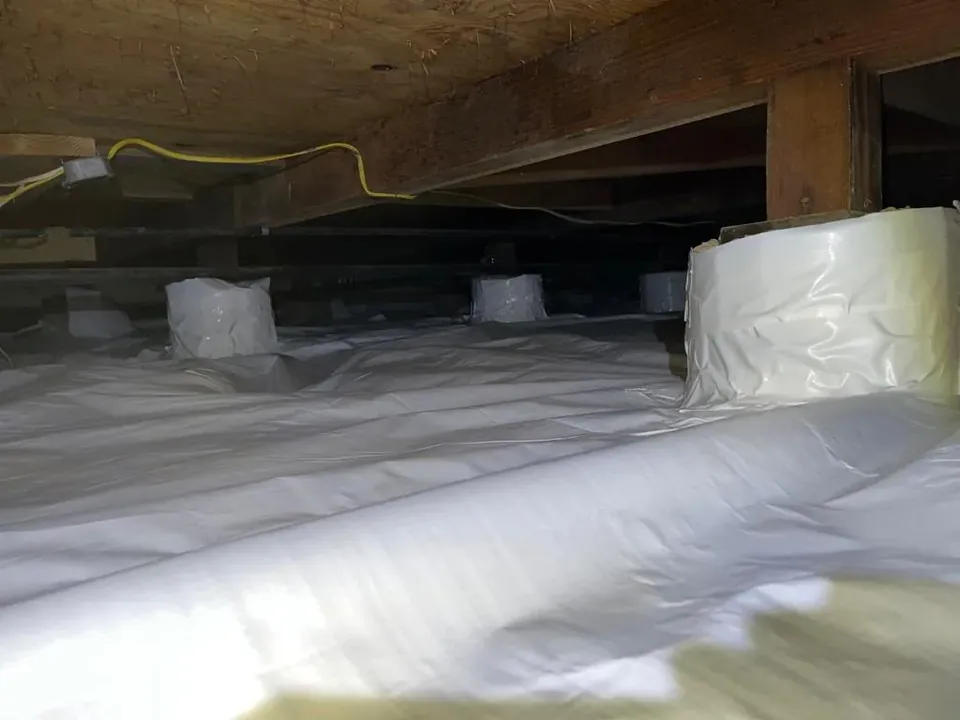
A clean start, full coverage, and wrapped piers. The barrier should lie flat over clean soil from wall to wall, with no bare patches.
- Clean out first: debris and old sheeting come out so the new barrier lies flat. See crawl space cleaning.
- Seal the openings: vents and gaps closed with galvanized steel mesh, putty and concrete, so animals don’t tear up the new barrier.
- Cover the soil: sheeting laid over the ground, wall to wall.
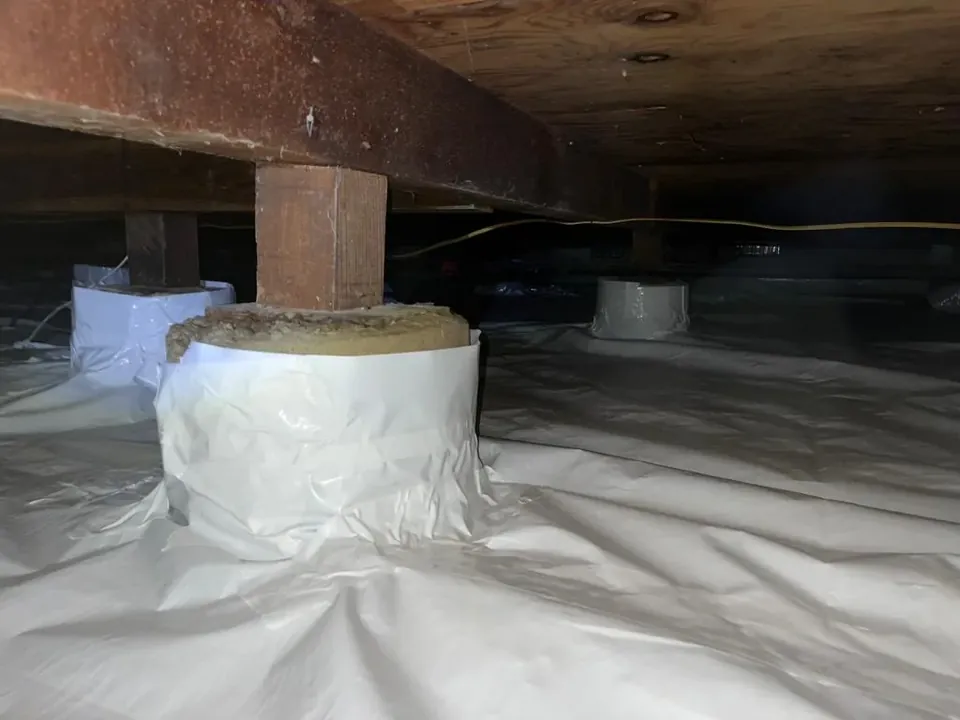
- Wrap the piers: the sheeting is wrapped around the piers, not just laid around them.
What vapor barrier do you install?
White, reinforced vapor barriers such as Viper CS, laid over the ground and wrapped around the piers.
White makes the crawl space brighter and easier to inspect later: droppings, leaks or damage stand out instead of hiding against dark soil. See vapor barrier for how we install it.
Will a vapor barrier fix standing water?
No. A vapor barrier deals with moisture rising from damp soil. Water pooling under the house is a drainage problem, and it needs to be fixed first.
If you see puddles in the crawl space after rain, or a plumbing leak, have that sorted out before the barrier goes down. Otherwise the water just sits under the sheeting.
Should I close the foundation vents after the barrier goes in?
No. Foundation vents let the crawl space breathe, and boarding them up can trap moisture. Keep them open and screened.
We screw galvanized steel mesh over each vent and close the edges with putty. Air moves through, animals don’t. See sealing outside openings.
Does a vapor barrier keep rodents out?
Not by itself. Rodents can tear through plastic sheeting. What keeps them out is sealing the vents and gaps with galvanized steel mesh, putty and concrete.
The barrier does help in another way: on clean white sheeting, droppings are easy to spot, so you know quickly if something has gotten in. And it doesn’t warm the floor; the batts between the floor joists do that, which is why many homeowners do both in the same visit.
What we see on real jobs
In crawl spaces around Palo Alto, Menlo Park and Cupertino, we usually find:
- Bare soil, or old plastic that is torn, dirty or covers only part of the ground.
- Fallen batts lying on the dirt.
- Foundation vents with torn or missing screens.
- Droppings on the soil.
A vapor barrier job is a one-day job, and it often goes in the same visit as crawl space cleaning, new ducts or new batts. Customers who book two or more services get 10% off (one discount per job). Book a free inspection or call us, and get a written quote the same day.