
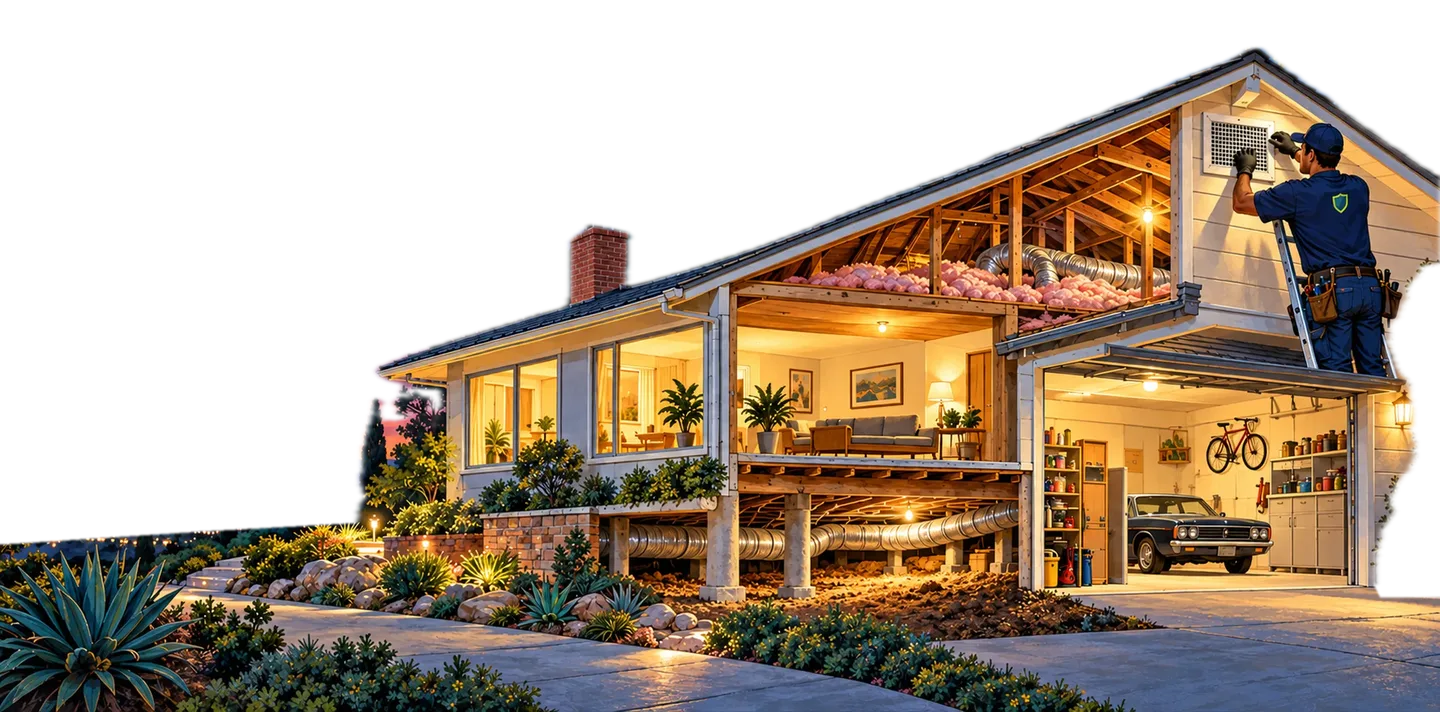
Do I need to replace my attic insulation after rats?
If it is soiled with droppings and urine, or flattened and tunneled through, yes. If it is clean and dry, it can sometimes stay.
It depends on how long the rats were there and how much of the attic they used. A short visit near one corner is very different from months of nesting across the whole attic floor. We check it at the free inspection and photograph what we find, so you can see it yourself.
How can I tell if the insulation is contaminated?
Look from the attic hatch with a flashlight, without climbing in or touching anything. These are the signs:
- Droppings on top of the insulation or along the joists.
- Paths, tunnels or flattened areas running through it.
- Yellow or dark stains where animals lived.
- Nests of shredded insulation, paper or fabric.
- A sharp, ammonia-like smell when you open the hatch.
Don’t stir it up. The CDC says not to sweep or vacuum rodent droppings, urine or nests, and to bag contaminated insulation for removal.
Can new insulation go on top of the old?
Only if the old insulation is clean and dry. Covering soiled insulation hides the mess, but it doesn’t remove it.
The droppings and urine stay under the new layer, and so does the smell. And if the openings were never sealed, rodents simply tunnel into the new layer too. Adding on top is fine when the old layer is in good shape and just too thin.
Does damaged insulation still work?
Much less well. Insulation works because of its thickness, and rodent tunnels, nests and flattened paths take that thickness away.
A flattened path through the insulation is a strip of attic floor with little or no protection. Heat comes down through it in summer and escapes through it in winter. Many homeowners notice the rooms under the attic getting harder to keep comfortable, without connecting it to the rats upstairs.
What happens to the old insulation?
It is removed, bagged and taken away with us. Then the attic is sanitized before anything new goes in.
Removal and sanitation are part of attic cleaning. Our post on attic cleaning after rodents walks through what comes out and why.
Which insulation should go back in?
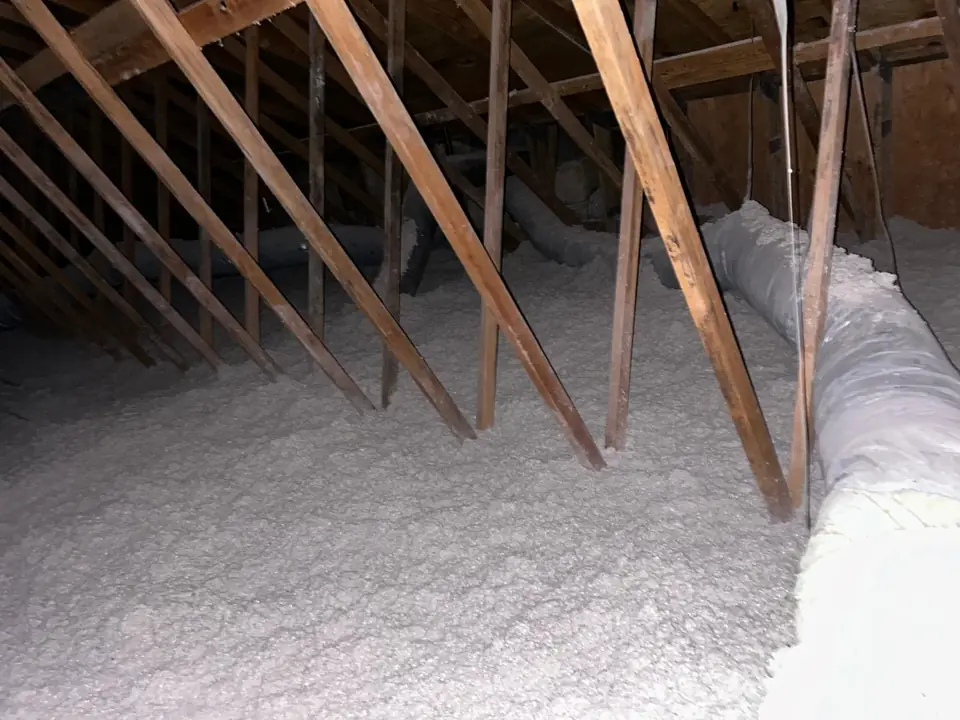
We install any type of insulation you want. Our most popular is blown-in cellulose, which fills evenly around wires, pipes and ducts on an open attic floor.
Batts are a good fit where the joist spaces are clear and even. We install brands like Owens Corning PINK fiberglass batts, Knauf EcoBatt, ROCKWOOL Comfortbatt (stone wool), and CleanFiber cellulose (our main one) and Mountain Fiber cellulose. For how the two compare, see cellulose vs fiberglass.
How much insulation should go back in?
Our usual target in the attic is R-38. We install any R-value, based on what you ask for and what we recommend at the inspection.
That lines up with ENERGY STAR, which recommends R-38 for an attic in Zone 3 that already has 3 to 4 inches of insulation, and R-49 for an uninsulated one. Most of the Bay Area falls in Zone 3. More in how much attic insulation you need.
Should the attic be sealed before new insulation goes in?
Yes, always. New insulation in an attic rodents can still reach becomes their next nest.
We seal the openings inside the attic, crawl space and garage, and outside at the vents, eaves and roof gaps, with galvanized steel mesh, putty and concrete. See rodent proofing.

Can I replace attic insulation myself?
Adding batts over a clean attic floor is a common DIY project. Removing soiled insulation is not.
It means bagging material full of droppings in a cramped, hot space, and for heavy infestations the CDC recommends extra protective gear, including a respirator with HEPA filtration. Blowing in cellulose evenly also takes a machine and practice to reach the right depth everywhere, including the low edges near the eaves.
Will the smell go away once the insulation is replaced?
Often, yes. The sharp, ammonia-like smell usually comes from urine soaked into the insulation, so removing it and sanitizing the attic deals with the source.
A smell can also come from a dead animal somewhere else in the house, or from the crawl space. That is why we check the attic, the crawl space and the garage at the same visit.
Should I replace it before selling the house?
It is worth considering. Home inspection reports often note droppings or damaged insulation in the attic or crawl space, and buyers read those notes.
Fixing the cause, with sealing, cleaning and fresh insulation, gives you before and after photos and a written invoice that show what was done. The crew takes those photos on the job day and sends them to you.
What we see on real jobs
In attics around Sunnyvale, Mountain View and Palo Alto, insulation after rats usually looks like this:
- Tunnels and flattened paths, with droppings along them.
- Stained patches near the eaves, where nests were.
- Thin spots where old insulation was pushed aside.
Rodent proofing with insulation replacement is a one-day job. Book a free inspection or call us. We check the insulation, show you photos, and send a written quote the same day.