

Can rats really live in an attic?
Yes, and they do well there. The rat most at home up high is the roof rat. The University of California says roof rats nest in enclosed, raised spaces such as attics, wall voids and ceilings, and that indoors they favor attic spaces (UC IPM rat guide).
An attic gives a rat almost everything it needs: a dry, sheltered space, soft insulation to build a nest in, and quiet hours with nobody around. What it lacks is food and water, and rats solve that easily.
How do rats find food and water from the attic?
They go out for it. UC says rats nesting in attics climb down to the ground to forage, mostly at night, and that roof rats routinely travel 300 feet or more for food. So a rat can sleep in your attic and eat in the yard next door.
Around Bay Area homes, the usual food sources are:
- Fruit and nut trees, including fruit that has fallen to the ground.
- Pet food left outside or stored in open bags.
- Garbage and compost without tight-fitting lids.
That is why rats can stay in an attic for a long time even when the house itself looks clean.
Will rats leave the attic on their own?
Rarely. Three facts from UC explain why:
- They come back to the same nest. UC says roof rats have very strong nest site affinity: if the nests are not removed, the rats return to them.
- They breed quickly. UC says roof rats usually have 3 to 5 litters, with up to 8 young in each.
- They don’t slow down for winter. UC says rats are active throughout the year.
Waiting usually means more rats, more droppings and more soiled insulation, not fewer.
Do noise makers or repellents drive them out?
No. UC says rats quickly become used to repeated sounds, which makes frightening devices, including high-frequency and ultrasonic ones, ineffective in homes. It also says no repellent has been found to solve a rat problem for more than a very short time.
Poison is not the answer either. UC warns that poisoned rats can come inside to die. In an attic, that means a smell in the rooms below and a carcass that is hard to reach. We don’t use poison.
What happens if rats stay in the attic?
- Wires. UC says rats living in an attic can cause considerable damage, and that their gnawing can lead to electrical sparks and fires.
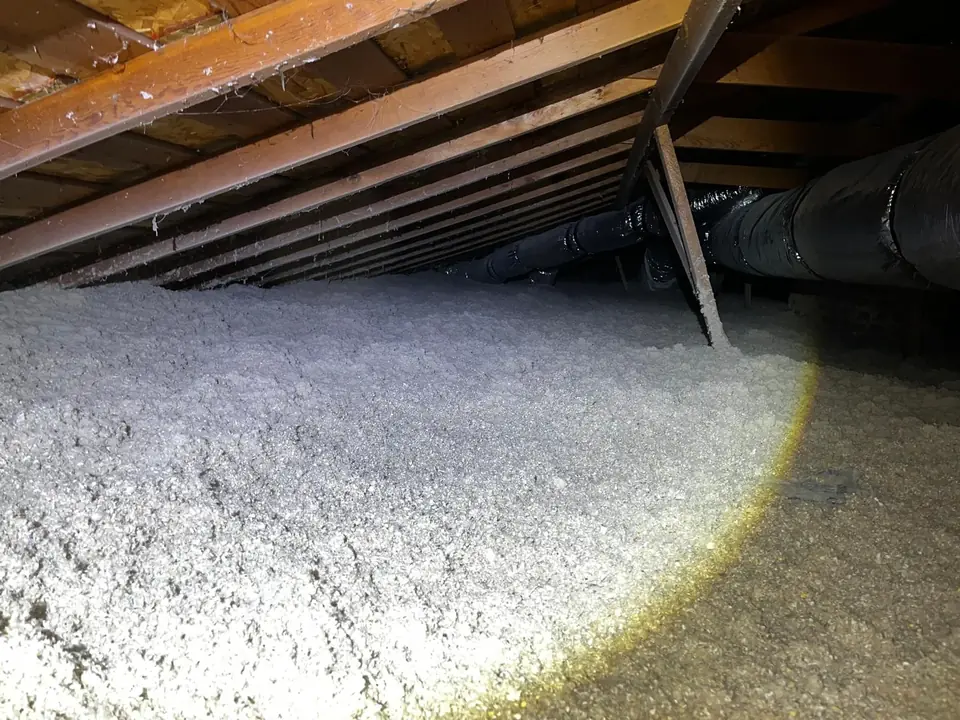
- Insulation. UC says rats shred insulation in walls and ceilings to build nests. Tunnels and droppings leave it flattened and soiled.
- Ducts. Chewed or torn ducts can blow heated or cooled air into the attic instead of your rooms.
- Health. UC says rats in buildings can contaminate food and spread diseases to people and pets.
If you go up to look, don’t touch droppings with bare hands. The CDC says never to sweep or vacuum rodent droppings, urine or nests, and to wear rubber or plastic gloves. For the full list of signs, see signs of rodents in your attic.
How do you get rats out of the attic for good?
Close the ways in first, then remove the rats still inside. UC calls exclusion the most successful and longest-lasting way to control rats around buildings, and says to seal every hole larger than 1/4 inch. This is the order we follow:
- Inspect. We check the attic, the crawl space, the garage and the outside of the house, to find the ways in.
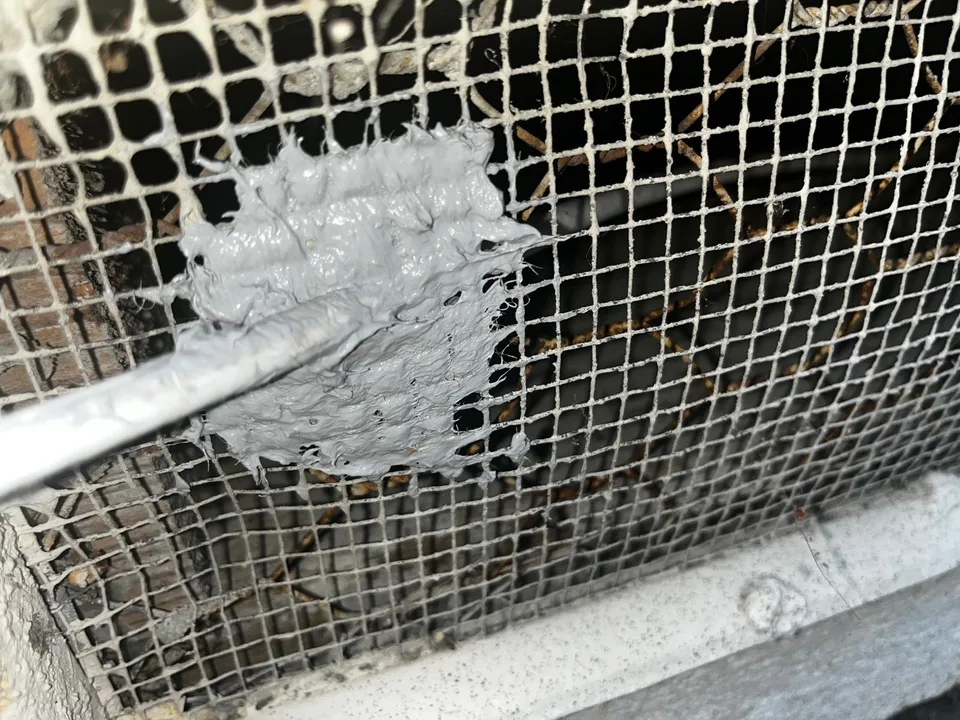
- Seal. Galvanized steel mesh, putty and concrete close every entry opening we find, including vents, eaves and roof gaps.
- Trap. Snap traps go where we see signs of travel. UC notes rats often avoid new objects at first, so trapping takes a little time.
- Check back. We return at least two weeks after the job to check the traps.
Rodent proofing comes with a warranty. The terms are written in your proposal and on your invoice. See rodent proofing and sealing outside openings. For the first steps in more detail, read rats in the attic: what to do first.
What about the nests and droppings left behind?
They need to come out, because UC says roof rats return to old nest sites. With attic cleaning, droppings, nests and soiled insulation are removed and hauled away, and the attic is sanitized.
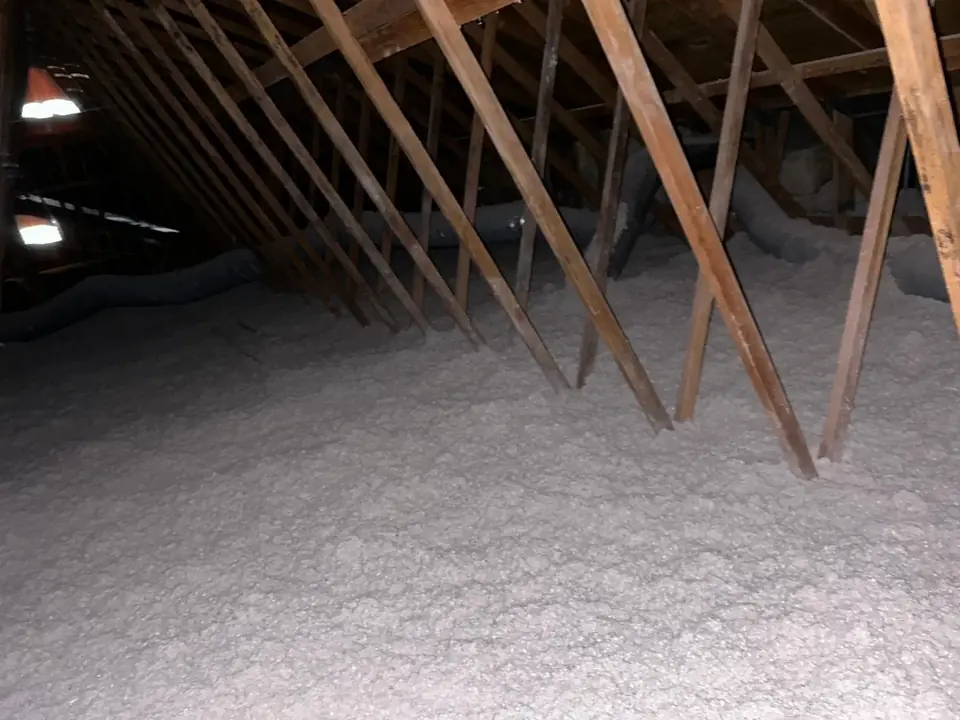
Then new insulation goes in. We install the R-value that fits your home, based on what you ask for and what we recommend at the inspection. Our most popular choice is cellulose. The crew takes before and after photos and sends them to you.
How long does it take?
Rodent proofing usually takes up to half a day when no insulation needs replacing. With insulation replacement, it usually takes one day. You need to be home on the job day, and it helps to clear the path to the work areas of breakable items. The crew covers that path with drop cloths or plastic sheeting.
What can I do today?
- Pick up fallen fruit and keep garbage and compost under tight-fitting lids.
- Bring pet food inside at night and store it in sealed containers.
- Listen at night and note where the sounds are. See what that noise in the attic could be.
- Walk around the house and note torn vent screens and gaps where pipes and wires go in.
These steps help, but they don’t close the openings. We see the same pattern in attics across San Jose, Milpitas and Santa Clara: rats get in through a vent, eave or roof gap and stay until it is sealed.
Hearing rats overhead? Book a free inspection or call 1-408-664-9888. You get photos of what we find and a written quote the same day, usually within 30–60 minutes.