

What should I do first if I have rats in the attic?
Stay calm, keep people and pets out of the attic, and don’t touch droppings with bare hands. Then get the house inspected so you know how the rats are getting in.
Rats in the attic are common in the Bay Area. Roof rats in particular like to live up high. UC Integrated Pest Management notes they nest in attics, wall voids and ceiling spaces, and in ivy, shrubs and trees outside. A yard with fruit trees or thick ivy near the house gives them food and cover.
Here is the short version of the right order:
- Confirm the signs: noises at night, droppings, chewed wires or ducts, tunnels in the insulation.
- Find every way in, inside and outside the house.
- Seal those openings so no new rats can get in.
- Catch the rats still inside.
- Clean up and sanitize, and replace soiled insulation if needed.
Can rats in the attic damage the house?
Yes. Rats gnaw all the time to keep their teeth short, and in an attic that means wires, ducts, insulation and anything stored up there.
Chewed wiring is a real concern, so if you see gnawed wires, have an electrician look at them. Torn or crushed ducts leak the air you pay to heat and cool into the attic. Tunnels and nests flatten the insulation, so it does less to keep the house comfortable. And the longer rats stay, the more droppings and urine build up in the insulation, which turns a sealing job into a cleanup job too.
That is the best reason to act early. The sooner the openings are sealed, the smaller the mess.
Should I use poison or rat bait?
We don’t recommend it, and we don’t use it. Poison does not close a single opening, so more rats keep coming in.
There is a second problem. A poisoned rat often crawls somewhere hidden before it dies, like a wall, the ceiling or the crawl space. Then you have a smell and no easy way to reach it. Pets and wildlife can also get into bait.
Can I just set traps?
Traps help with the rats already inside, but traps alone don’t fix the problem. As long as the openings stay open, new rats replace the ones you catch.
That is why so many homeowners tell us, “We trapped a few rats, but more keep showing up.” Trapping works when it comes after the sealing, not instead of it.
Is it safe to clean rat droppings myself?
A few droppings in the garage, yes, if you follow the CDC steps. An attic full of droppings, nests and soiled insulation is a job for a crew with protective gear.
For small cleanups, the CDC says:
- Don’t sweep or vacuum droppings, urine or nests.
- Wear rubber or plastic gloves.
- Spray the droppings with a disinfectant, or a mix of 1 part bleach to 9 parts water, and let it soak 5 minutes.
- Wipe up with paper towels, bag them, then wash your hands well.
In an attic, the droppings are spread through the insulation, so that approach doesn’t scale. See attic cleaning for how we remove droppings, nests and soiled insulation and then sanitize.
How do I find where the rats are getting in?
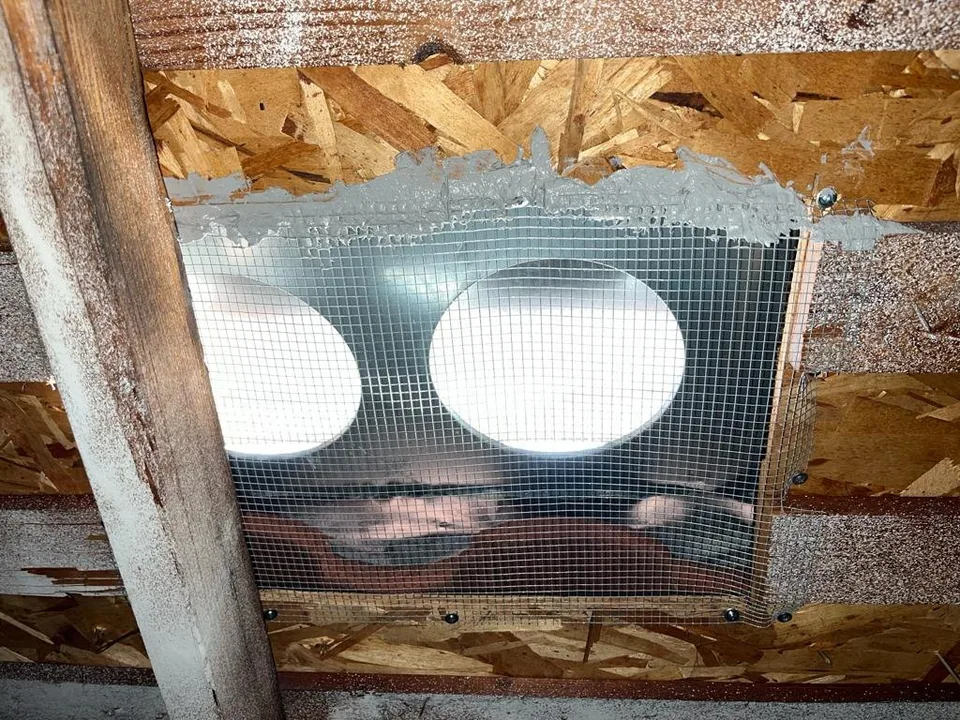
Look at the places where the house has openings: vents, eaves, roof gaps and the spots where pipes and wires enter. A full inspection checks them all, inside and out.
Rats can squeeze under a door with only a half-inch gap, and UC IPM advises sealing every hole larger than 1/4 inch to keep out both rats and mice. Small gaps count. Our guide on how rats and mice get into your attic walks through the most common entry points.
Do I need to replace the insulation after rats?
Often, yes, if it is soiled with droppings and urine or flattened by tunnels. Insulation in good shape can sometimes stay. We check it at the inspection and photograph what we find.
When insulation has to go, it comes out, the attic is sanitized, and fresh insulation goes in after the openings are sealed. We install any type of insulation you want; our most popular is cellulose. See cellulose vs fiberglass for how the types compare.
What we see on real jobs
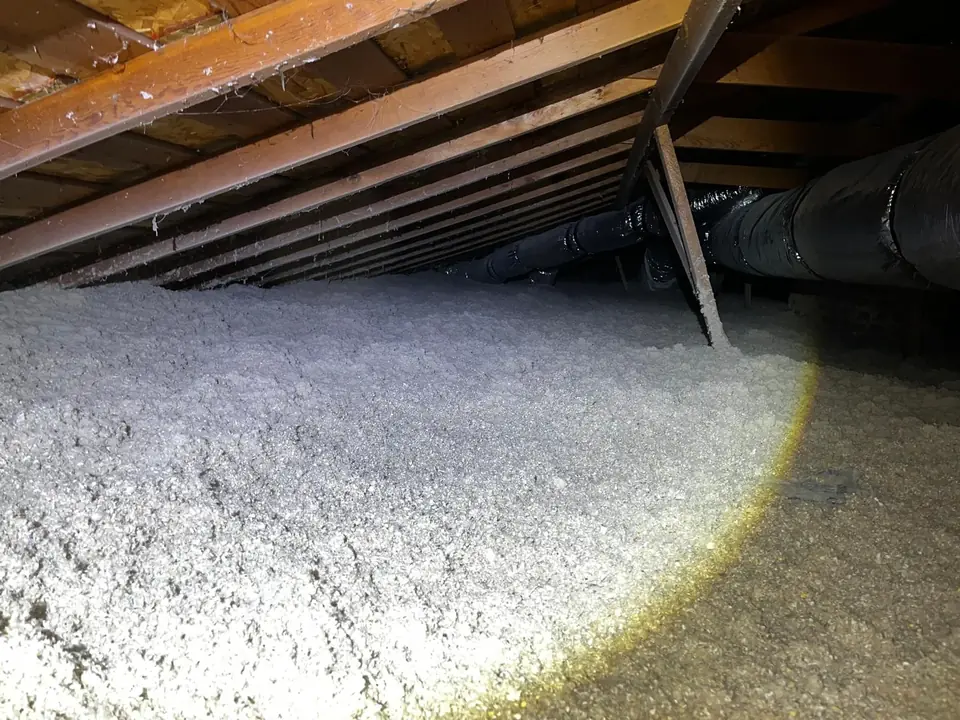
When we inspect homes with rats in the attic, from Sunnyvale to Fremont, the same patterns come up again and again:
- More than one way in, often both low (crawl space and foundation vents) and high (eaves and roof gaps).
- Tunnels and nests in the attic insulation, with droppings along the paths.
- Chewed wires and torn or crushed ducts.
- Traps already set by the homeowner, with rats still coming in.
Each of those gets fixed in its own step: sealing for the openings, traps for the rats inside, cleaning for the mess, and new flexible insulated ducts where ducts are damaged.
How long does it take to get rid of rats in the attic?
Rodent proofing without insulation replacement is up to a half-day job. With insulation replacement, it is a one-day job. Then we come back at least two weeks later to check the traps; that visit is included.
We seal with galvanized steel mesh, putty and concrete, inside and out. Rodent proofing comes with a warranty, written on your invoice. Ready to start? Book a free inspection and get a written quote the same day.