
What San Jose homeowners book with rodent proofing
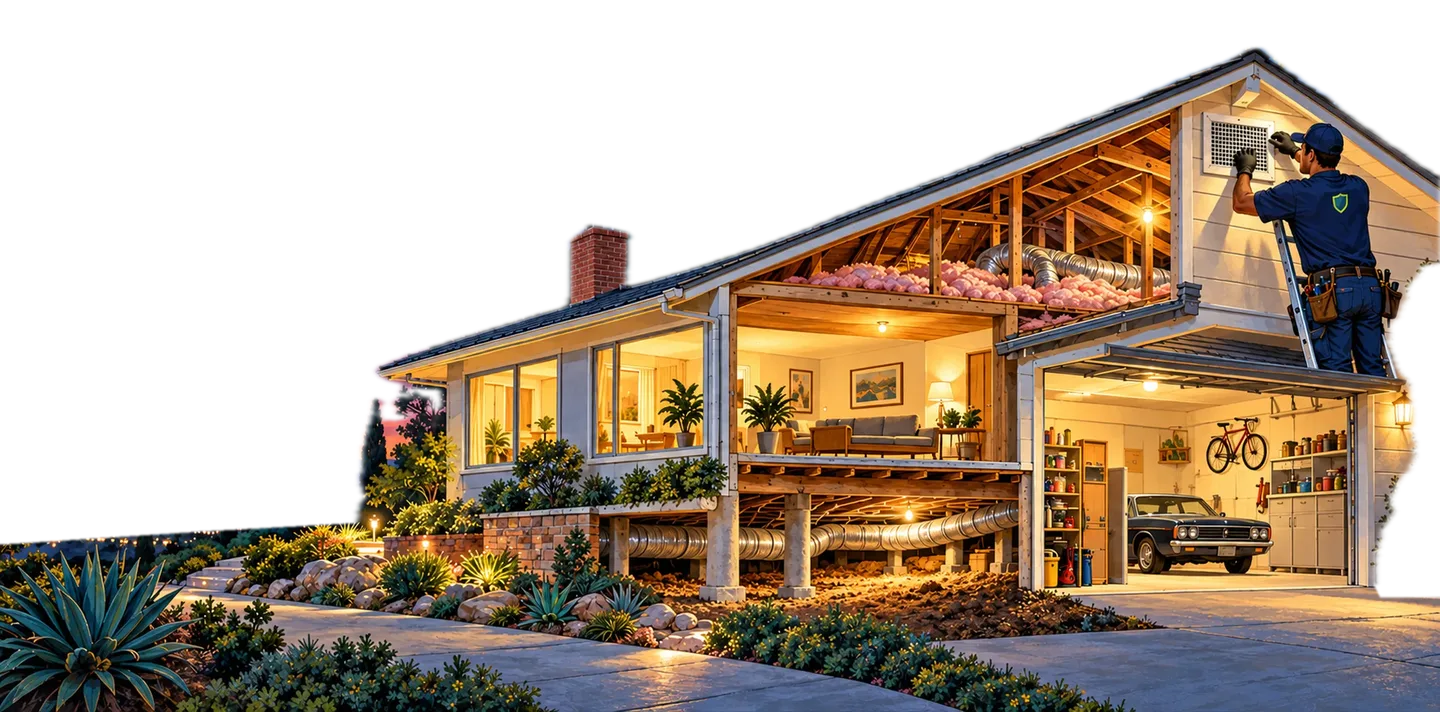
Rodent proofing is one of the services San Jose homeowners book most. Also among the most booked are attic cleanup and sanitizing, sealing outside openings, and new insulation. Many jobs include more than one of these, and one free inspection covers all of them.
Our base is San Jose, and we work across the whole city and the rest of the Bay Area. Here is how the pieces fit:
- Rodent proofing: every way in closed, traps set, one follow-up visit included.
- Attic cleaning and crawl space cleaning: droppings, nests and soiled insulation out, then sanitizing.
- Sealing outside openings: vents, eaves and roof gaps.
- New attic insulation once the attic is clean and sealed.
Roof rat or Norway rat? It tells you where to look
Two kinds of rat are common in California homes, and they behave differently. This is general guidance from the University of California (UC IPM), not a diagnosis. We confirm what you have at the free inspection.
- Roof rats are climbers. They nest in trees, shrubs and dense plants like ivy, and indoors they favor attics, wall voids and ceiling voids. At night they often run along overhead utility lines and fence tops.
- Norway rats are stockier burrowers. Their burrows run along foundations and under woodpiles or rubbish, and indoors they usually stay in basements and ground-floor areas.
So scratching overhead at night more likely points to a roof rat in the attic, and digging along the foundation or droppings near a crawl space vent more likely points to a Norway rat. Mice are the other common visitor, and they fit through very small gaps: the CDC says a mouse can squeeze through a hole the width of a pencil. See the CDC guide to sealing up.
Walk around the outside before we come
Rodents rarely come in through one big hole. A quick look around your house shows how they may be getting to it. These tips come from the UC IPM rat guide:
- Tree limbs over the roof. UC IPM says overhanging limbs within 6 feet of the roof should be removed.
- Shrubs against the house. Leave space (at least 2 feet) between shrubs and the walls.
- Climbing plants. Ivy and vines on the walls give roof rats a ladder.
- Fence tops and overhead lines. These are rat roads. Never trim near power lines: call the utility or a professional.
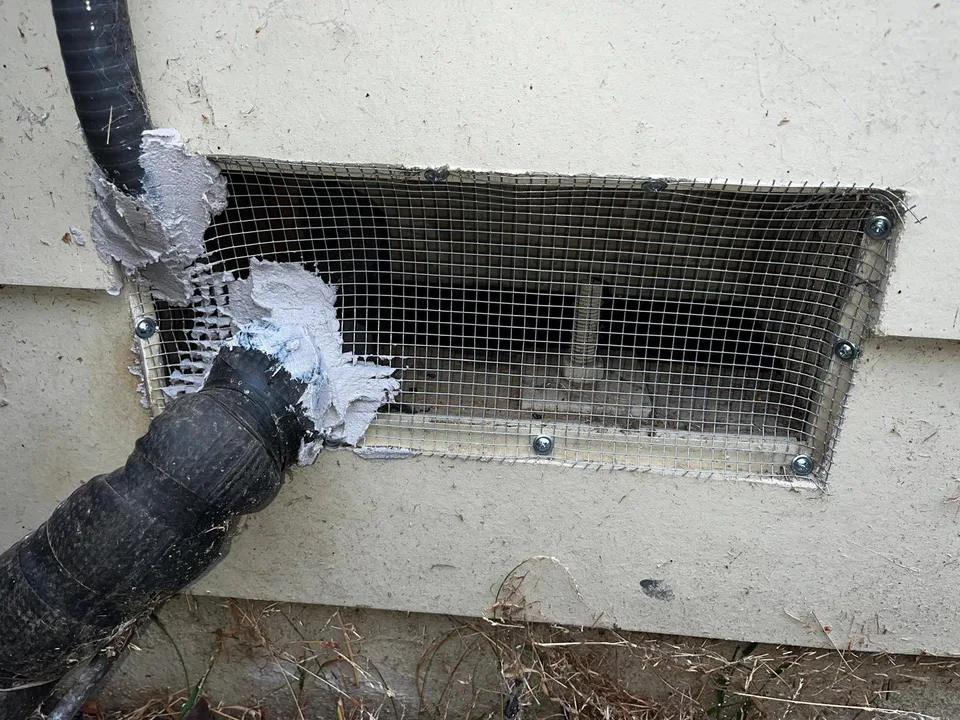
- Gaps and vent screens. UC IPM says to seal cracks and openings larger than 1/4 inch. Look at foundation vents and where pipes, AC lines and cables enter the house.
Trimming and tidying help, but they do not stop rodents that already use a gap. The openings have to be closed. Make a note of what you see and point it out at the inspection.
“We trapped a few rats, but more keep showing up”
This is one of the most common things we hear. Traps remove the rats that are inside. If the ways in stay open, new ones keep arriving.
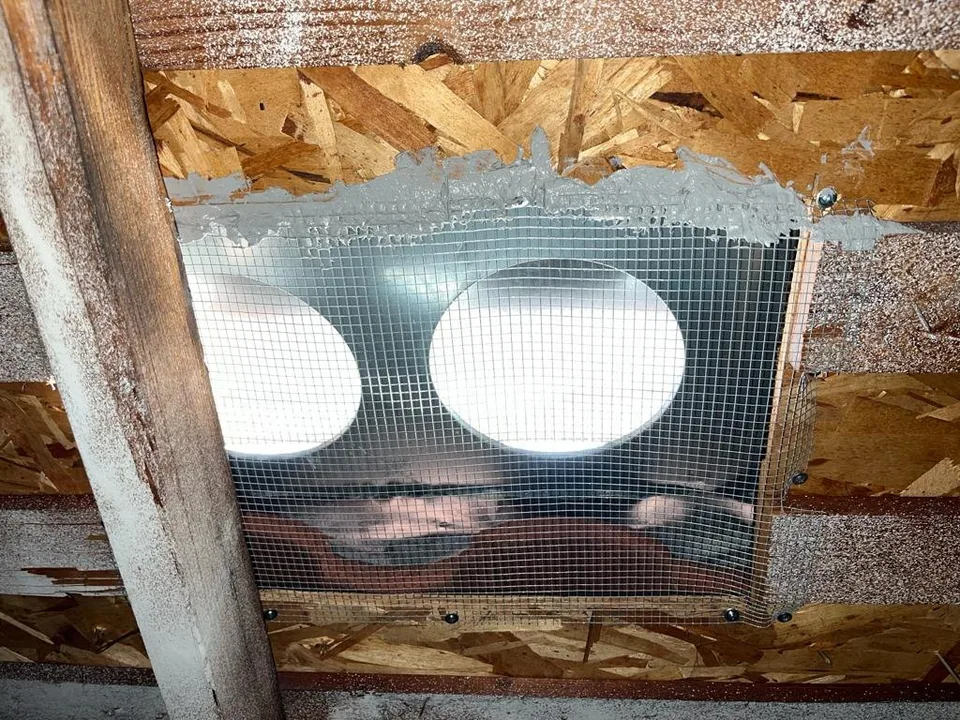
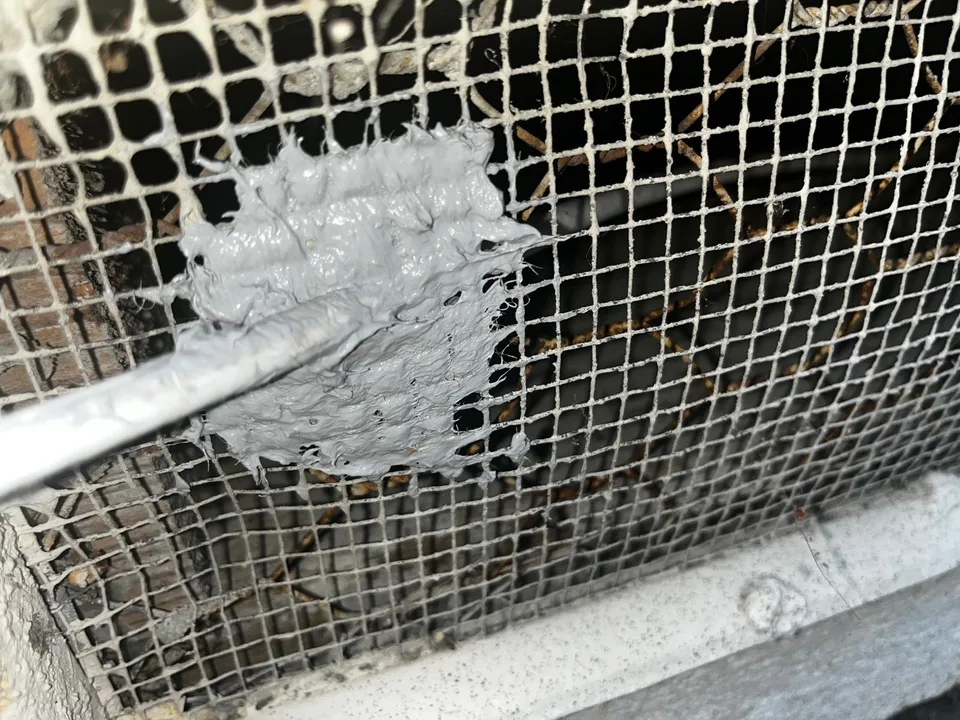
That is why we seal and trap in the same visit. Every opening is closed with galvanized steel mesh, putty and concrete, inside and out. We set snap traps for rats and mice, and live traps for larger animals. We come back at least two weeks later to check the traps, and that visit is included. Rodent proofing comes with a warranty.
We never use poison. A poisoned rodent can die inside a wall or under the floor, where nobody can reach it, and the smell can be strong. UC IPM says to minimize entry points to buildings before baiting outside, so poisoned rats do not come inside to die. See why a crawl space smells.
The garage and the crawl space count too
Rats do not stop at the attic. At the free inspection we check the attic, the crawl space, the garage and the openings outside. Everything goes on one written quote, usually within 30–60 minutes of the inspection, the same day at the latest.
Where in San Jose we work
We work across all of San Jose, including neighborhoods such as Willow Glen, Almaden Valley, Evergreen, Berryessa, Cambrian and Rose Garden, and in the cities next door: Santa Clara, Cupertino, Milpitas and Los Gatos. See the San Jose overview for every service we offer here.