
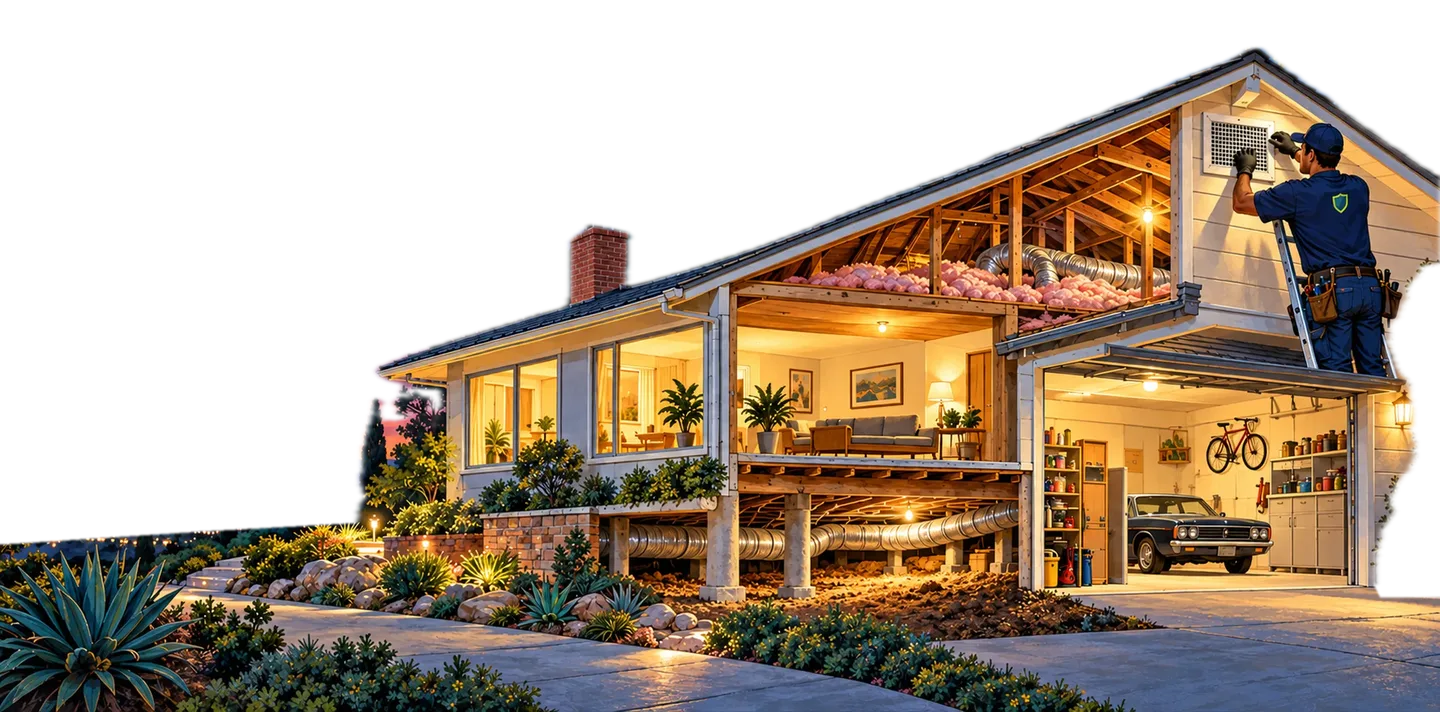
What San Jose attics usually need first
New insulation and removing old insulation both come up more often in San Jose than elsewhere in the Bay Area, based on the jobs we have finished. In practice that means many San Jose attics need the old layer dealt with before anything new goes in.
Old insulation should come out first when it is:
- soiled with droppings or nests, or tunneled by rodents,
- stained from an old roof leak, or wet,
- flattened, patchy or pushed into piles.
If it is clean and dry, it can sometimes stay. We check at the free inspection. See attic cleaning for what the cleanout includes.
Cellulose, batts or something else?
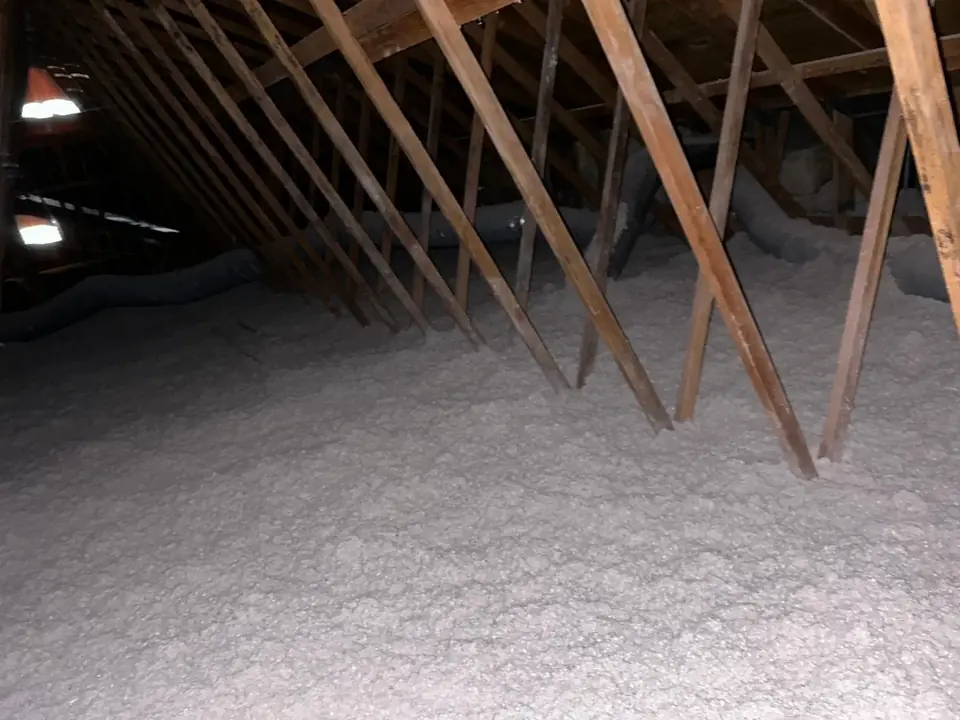
We install every type of insulation. Our most popular is blown-in cellulose, which is blown across the attic floor in an even layer to the depth that gives the R-value you choose. Batts are cut to fit between the framing and come in set thicknesses.
Blown cellulose is often the easier fit for an open attic floor with wires, pipes, ducts and odd corners, because it fills around everything. Batts suit clear, even joist spaces. We make that call in your attic, not from a chart. Our post on cellulose vs fiberglass explains the difference in plain words. Details: cellulose insulation and batt insulation.
Which R-value fits a San Jose attic?
We install any R-value, for any insulation type, based on what you ask for and what we recommend at the free inspection. The attic gets the thickest layer. Our usual targets are R-38 in the attic, R-19 under the floor in a crawl space, and R-13 to R-15 in walls.
The quote shows the type and the R-value, so you can compare it line by line with any other quote. If you already have a quote, our compare your quote page shows what a good one lists.
Why you may see “Climate Zone 4” on paperwork
California’s energy code divides the state into 16 climate zones. The code uses San Jose as the standard weather city for Zone 4 (see Table 2-1). Zone lines can cut through a ZIP code, so check your own address with the California Energy Commission climate zone tool.
Some energy code rules are set by zone. If you are also replacing ducts, see air duct replacement in San Jose.
Rats first, insulation second
If rodents have been in the attic, new insulation over their entry points just gives them a fresh place to nest. The order that works is: clean out, sanitize, seal the openings with galvanized steel mesh, putty and concrete, then insulate. We can do all of it on one written quote. Start with what to do first when you find rats or see rodent proofing in San Jose.

Upstairs too hot? Ask about a radiant barrier
If the upstairs stays warm well into the evening, a radiant barrier works together with the insulation on the attic floor: it reflects the sun’s heat in the attic, and the insulation slows what still gets through. Read is a radiant barrier worth it? or see radiant barrier.
Job day
Insulation is a one-day job. Please be home, and clear the path to the work areas of breakable items. The crew covers the path from your front door to the attic with drop cloths or plastic sheeting, and our crew sends you before and after photos.