
What is that noise in my attic at night?
In most Bay Area homes, scratching, scurrying or gnawing above the ceiling after dark is a rodent, usually a rat or a mouse. Heavier thumps and walking sounds point to a larger animal like a raccoon.
Houses go quiet at night, so you notice sounds you would miss during the day. Rats are also mostly active at night, according to UC Integrated Pest Management at the University of California. That is why so many calls start with “we hear something in the ceiling when we go to bed.”
Is it a rat, a mouse, a squirrel or a raccoon?
The time of day and the kind of sound tell you a lot. Use this as a rough guide, then confirm with the signs below.
- Rats: scurrying, scratching and gnawing, mostly at night. Sometimes it sounds like something small rolling across the attic floor. Roof rats are strong climbers and like to nest up high, in attics and wall voids.
- Mice: lighter, faster scratching, often inside the walls as well as the ceiling. A mouse can fit through a hole about the width of a pencil, so they reach places rats can’t.
- Squirrels: running and scratching during the day, often early morning and late afternoon. Tree squirrels are awake in daylight and quiet at night.
- Raccoons: heavy thumping, walking or dragging sounds at night. They are big and strong enough to pull apart a loose vent cover.
- Bats: faint rustling or squeaking near dusk, when they leave to feed.
Noises under the floor are a different story. Skunks and opossums tend to move into crawl spaces, not attics. See why a crawl space smells if you also notice an odor.
Why do I hear it in the walls and the ceiling?
Rodents travel. They come in at one point, then use wall gaps, pipe runs and the spaces between ceiling joists as hallways.
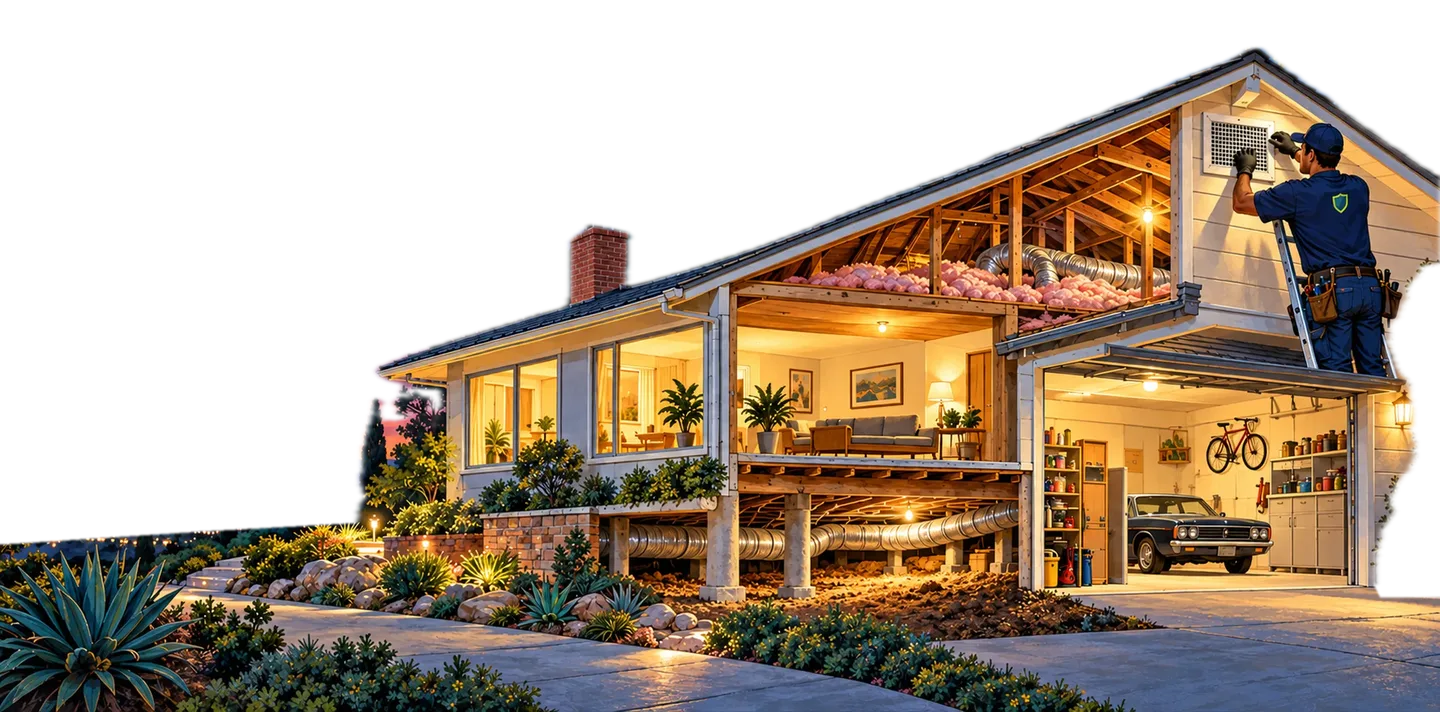
So the noise over your bedroom may come from an animal that got in through a foundation vent on the other side of the house. Where you hear it is rarely where it got in.
How can I check what it is without going into the attic?
Start outside and in the garage, where it is safer and easier to look. You are looking for signs, not the animal.
- Small dark droppings in the garage, on shelves or along walls.
- Dark smudge marks on beams, pipes or walls where fur rubs as rodents run. UC IPM lists these as a common rat sign.
- Chewed or bent vent screens on the foundation, the roof or the gable ends.
- Gnawed fruit or nuts under backyard trees, another sign UC IPM points to.
- Tree branches, ivy or fences that touch the roofline and give climbers a path up.
Also keep a quick note of when you hear the noise. Night only points to rats or mice. Daytime points to squirrels.
Is it safe to go up and look?
Going up for a quick look with a flashlight is usually fine, but don’t stir up droppings or old insulation. Rodent urine and droppings can carry disease.
The CDC says not to sweep or vacuum rodent droppings, to wear gloves, and to soak them with disinfectant before you wipe them up. If the attic is full of droppings and nests, cleanup is a job for a crew with the right gear. See attic cleaning.
What should I do right now?
Skip the poison, keep pets and kids out of the attic, and find out how the animals are getting in. That last step is the one that ends the noise for good.
Poison bait does not close any holes, and a poisoned rodent can die inside a wall or ceiling where you can’t reach it. We don’t use poison at all. Traps catch the rodents already inside, but new ones keep coming as long as the openings stay open.
The lasting fix is to find every way in and seal it. That means the openings outside (vents, eaves and roof gaps) and the gaps inside the attic, crawl space and garage. For rats and mice we set snap traps; for larger animals like raccoons, squirrels, opossums and skunks we set live traps. See rodent proofing and sealing outside openings.
What we see on real jobs
When homeowners call about noises at night, the inspection usually turns up a few things together:
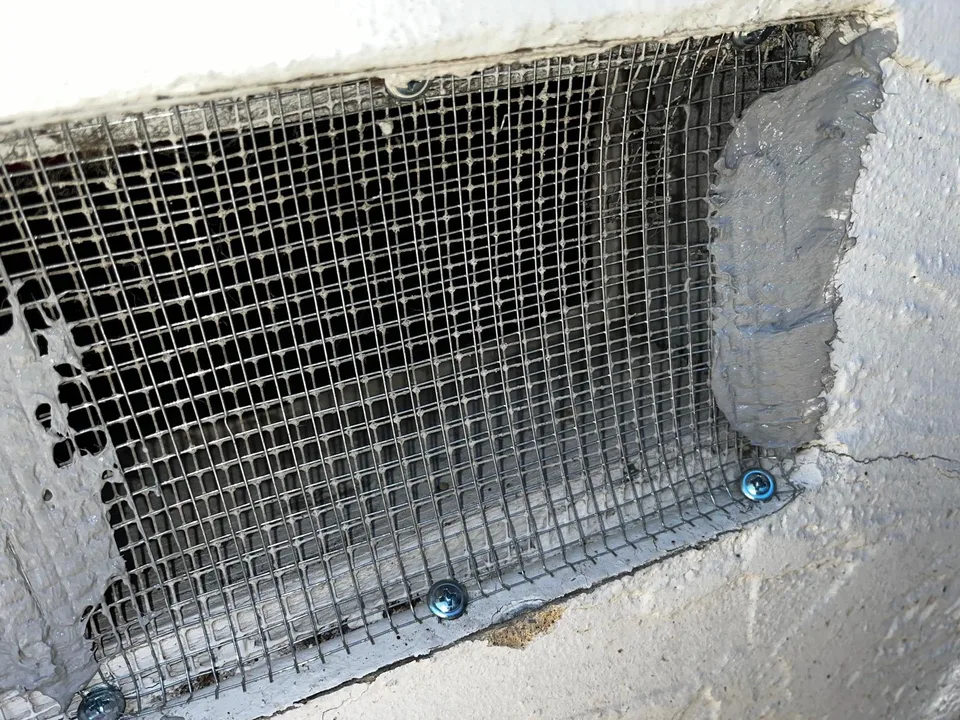
- Foundation or wall vents with torn, rusted or missing screens.
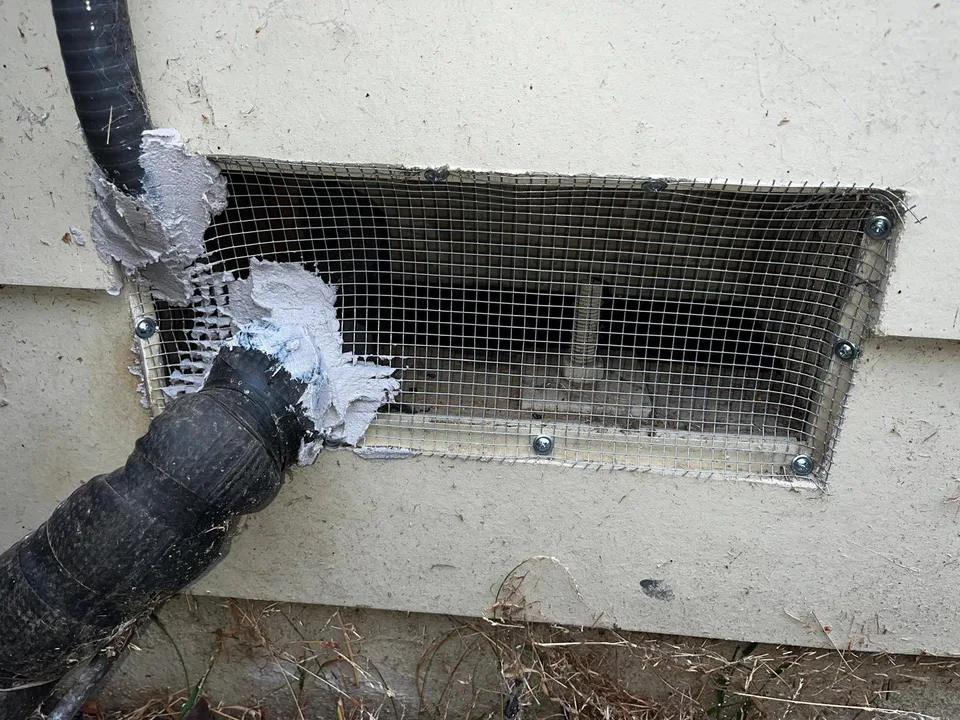
- Gaps where pipes, wires and AC lines enter the house.
- Openings at the eaves and roof gaps, often near trees.
- Paths and tunnels through the attic insulation, and droppings along them.
It is rarely one hole. That is why we check the attic, the crawl space, the garage and the outside of the house at the same visit, from San Jose to hillside homes in Los Gatos with big trees close to the roof.
Will the noise stop after rodent proofing?
Yes, once every way in is sealed and the rodents already inside are caught. Some noise in the first days can be normal.
After the openings are closed with galvanized steel mesh, putty and concrete, the rodents still inside look for a way out, and the traps catch them: snap traps for rats and mice, live traps for larger animals. We come back at least two weeks after the job to check the traps; that visit is included. Rodent proofing also comes with a warranty, written on your invoice.
Hearing noises tonight? Book a free inspection. We check the attic, crawl space, garage and the openings outside, and send a written quote the same day.