

Can rats climb walls?
Yes. Roof rats are great climbers, and that is how so many of them end up in attics. The University of California calls them agile climbers with excellent balance, using their long tails to steady themselves (UC IPM rat guide). Mice climb well too: UC says house mice can run up any rough vertical surface.
So a rat on the ground is not stuck on the ground. It can go up a tree, a vine, a fence or a wire, and reach your roof without ever touching a door.
Which rats climb: roof rats or Norway rats?
UC says two kinds of rats live in almost every city in California: roof rats and Norway rats. They use different parts of a house.
- Roof rats are sleek and agile. UC says they are better climbers than Norway rats, nest high in trees, shrubs and ivy, and indoors favor attics, wall voids and ceiling voids.
- Norway rats are larger and stockier. UC says they dig burrows along foundations and usually stay in the basement and ground floor. Even so, UC notes they are found in ceiling voids too.
When both live in the same building, UC says Norway rats usually stay low and roof rats take the upper floors. That is why the attic is roof rat territory, and why the fix has to look high as well as low.
How do rats get from the ground to the roof?
They use whatever touches or hangs over the house. These are the routes UC describes:
- Tree branches. UC says limbs hanging within 6 feet of the roof let rats and tree squirrels reach the roof and get into attics and soffit vents.
- Climbing plants. Ivy, star jasmine and honeysuckle on fences or walls make it easy for roof rats to forage and move in, UC says.
- Utility lines and fence tops. UC says roof rats are often seen at night running along overhead lines and the tops of fences.
- Rough walls. Mice can run up any rough vertical surface, according to UC.
Once on the roof, they look for a gap: an eave, a roof vent, a spot where roof lines meet. Our post on how rats and mice get into your attic lists the common entry points.
Can rats climb up inside the walls?
Yes. UC lists wall voids and ceiling voids among the places roof rats nest. Rats that get in low, through the crawl space or the garage, can follow pipes and wall gaps up toward the attic. Mice, UC says, also run along wire cables.
Inside the house, roof rats use pipes and beams the way they use branches outside. UC even advises setting traps for roof rats up high, on ledges, shelves, pipes and overhead beams, because that is where they travel. If you hear scratching between floors, see scratching noises in the walls.
Signs rats are climbing into your home
These signs all come from the University of California’s list:
- Noises in the attic or ceiling, mostly at night. See what that noise in the attic could be.
- Rats on the fence or the wires at dusk or soon after.
- Dark smudge marks on beams, rafters, pipes and walls, where rats rub their fur as they pass.
- Hollowed-out oranges still hanging on the tree. UC says roof rats eat the fruit through a small hole and leave the empty rind.
- Droppings in the attic, often along the paths they use.
What can I do around the house?
Cutting off the climbing routes makes the roof harder to reach. All of these steps come from UC’s rat guide:
- Trim trees. Cut back limbs that hang over or near the roof.
- Thin the vines. Thin or remove ivy, star jasmine and honeysuckle growing on the house or fences.
- Give plants some space. UC suggests pruning dense shrubs 2 feet or more away from buildings, so rats can’t travel unseen.
- Pick up fallen fruit. Fruit trees feed roof rats. Pick up what falls.
- Ask about the wires. If rats are running along overhead utility lines, UC says to contact a pest professional or the utility company.
Trimming helps, but a rat already living in the attic doesn’t need the tree anymore. The openings still have to be closed.
Why openings high on the house need sealing too
UC is direct about it: because roof rats are excellent climbers, openings above ground level must also be plugged. UC also says finding the entry points for roof rats usually takes more time than for Norway rats, because they can climb to so many places.
That is why the free inspection covers the attic, the crawl space, the garage and the outside of the house. We look low, at foundation vents and gaps around pipes, and high, at the eaves, roof vents and roof gaps. On homes near big trees, from Los Gatos to Palo Alto, we often find openings at the eaves and roof close to the branches, and usually more than one way in.
How we seal the openings rats climb to
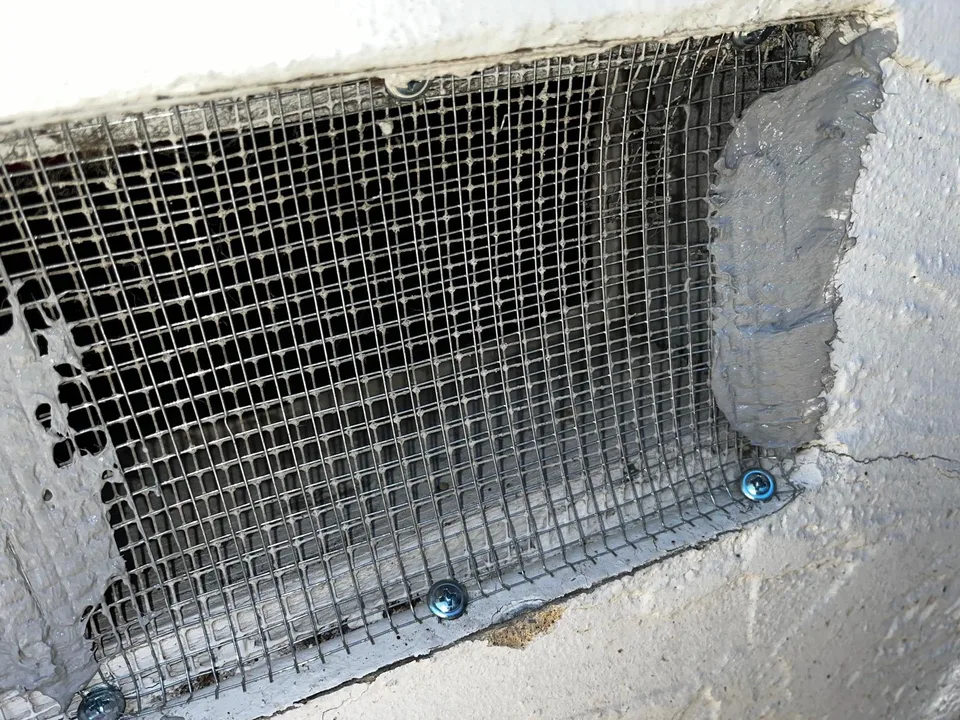
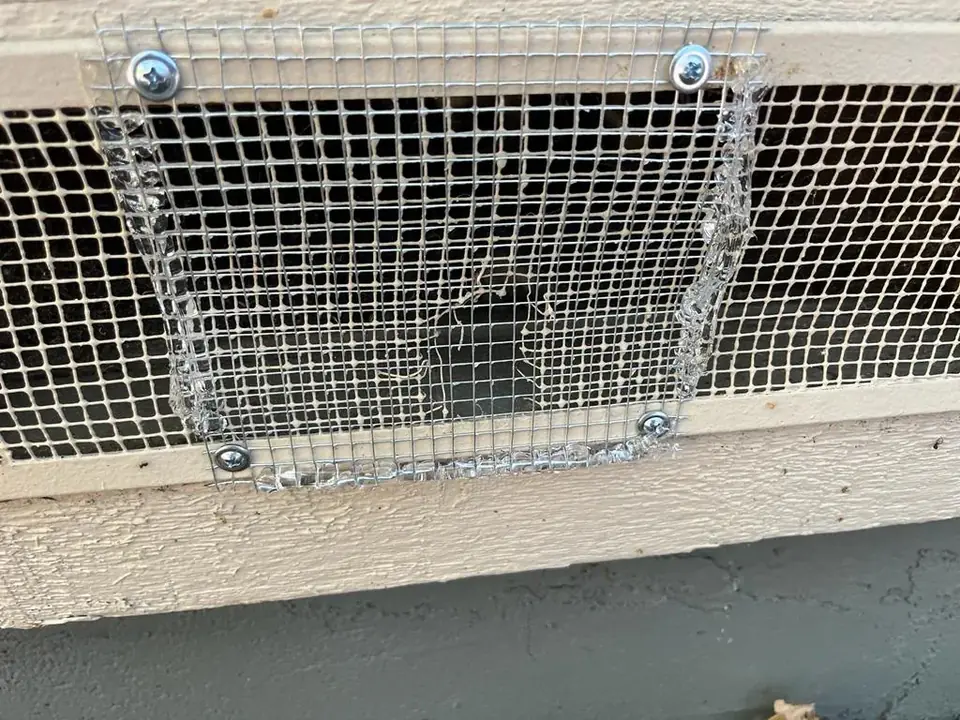
We seal every entry opening we find with galvanized steel mesh, putty and concrete. The mesh is screwed over vents and openings, putty closes the edges and the gaps around pipes and wires, and concrete goes where the opening calls for it. UC warns against lightweight chicken wire, because rats pass right through it. See why we seal with steel mesh.
After the openings are sealed, we set snap traps for the rats and mice still inside, and come back at least two weeks later to check them. Rodent proofing comes with a warranty. The terms are written in your proposal and on your invoice. Rodent proofing usually takes up to half a day when no insulation needs replacing. With insulation replacement, it usually takes one day. See rodent proofing and sealing outside openings.
Rats already in the attic?
If rats have been living up there, the insulation is often soiled with droppings and flattened by tunnels. We clean and sanitize the attic, haul the old insulation away, and, if you want, put fresh insulation in after the openings are sealed. See attic cleaning.
Hearing climbing or scratching overhead in San Jose or anywhere in the Bay Area? Book a free inspection or call 1-408-664-9888. You get photos of every opening we find and a written quote the same day, usually within 30–60 minutes.