Why do rodents end up in the garage?
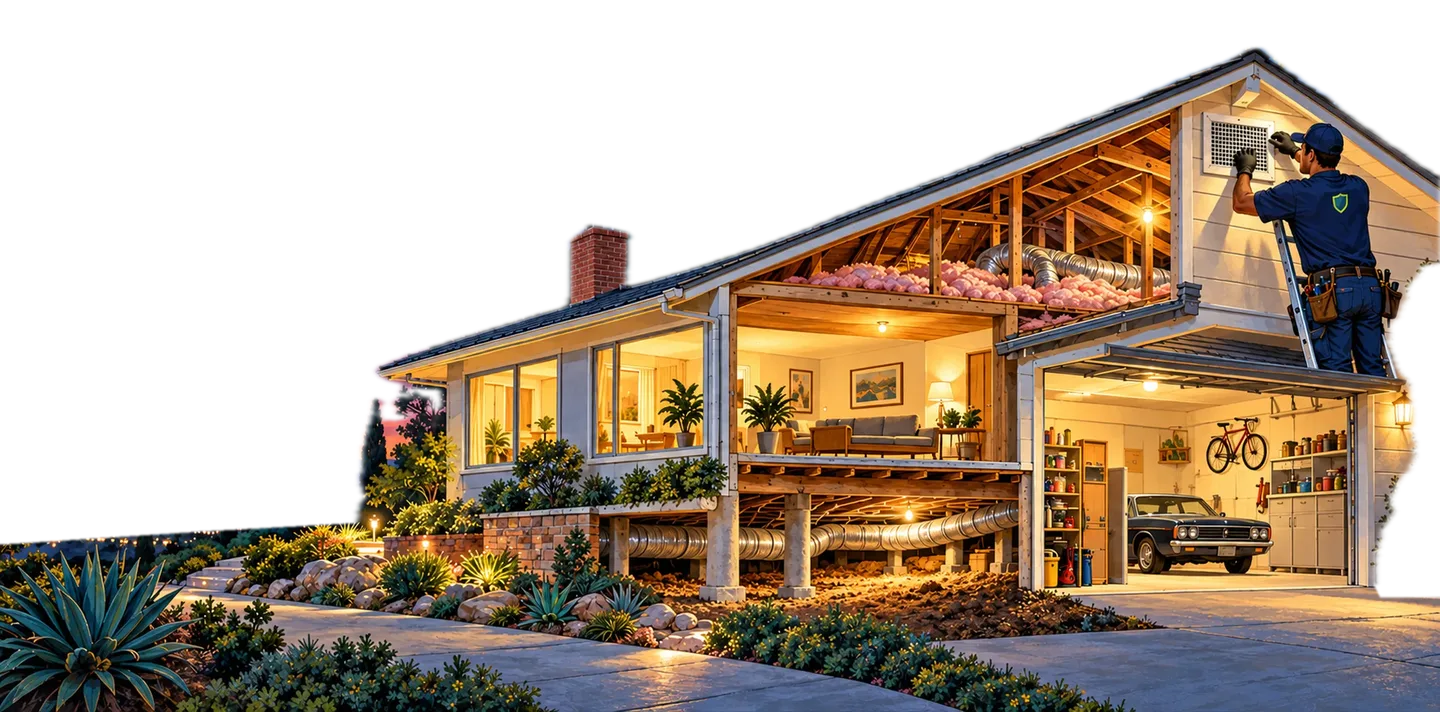
The garage is one of the most common ways rodents get into a home. It has a big door that opens every day, gaps along the bottom, and lots of stored boxes to hide behind. From there, rats and mice can move into the walls, the attic and the rest of the house.
The University of California says rats nest behind boxes and in cluttered garages, and that young rats can squeeze under a door with only a 1/2-inch gap (UC IPM rat guide). The CDC says mice can fit through a hole the width of a pencil, and tells homeowners to seal garages as well as the house.
Signs of rats or mice in the garage
- Droppings along the walls, on shelves or behind stored boxes.
- Chewed boxes, bags or pet food, often with shredded paper nearby. UC says mice build nests from finely shredded paper and other soft material.
- Chewed wires or cords. UC says mice can chew the cords of appliances and wires in walls.
- Scratching at night. UC says rats are mostly active at night.
- Daylight at the bottom corners of the closed garage door.
Hearing noises above the garage ceiling too? See what that noise in the attic could be.
Is it rats or mice?
Look at the droppings. Rat droppings are clearly larger than mouse droppings. Mice are small and good climbers: UC says they can run up any rough vertical surface, so shelves are within their reach. Either way, the fix is the same: close the ways in. We also deal with larger animals that get into garages and attics, like squirrels, raccoons, skunks and opossums.
What can I do this weekend?
A few simple steps, all from the University of California’s advice, make your garage much less inviting:
- Cut the clutter. Keep boxes and household goods tidy and off the floor. UC says this makes the area less suitable for rats and makes them easier to spot.
- Lock up the food. Store pet food in rodent-proof containers, and keep garbage cans covered with tight-fitting lids.
- Check the door. Close the garage door and look for light at the corners and along the bottom seal. UC suggests door sweeps or weather stripping to close gaps.
- Look for holes. UC says every hole larger than 1/4 inch should be sealed, including around pipes and wires.
What not to do
- Don’t sweep or vacuum droppings. The CDC says this can put germs into the air. Wear rubber or plastic gloves, and see what a proper cleanup involves.
- Don’t leave poison in the garage. UC says all rodenticides are toxic to pets and people too. We don’t use poison.
- Don’t rely on traps alone. New rodents walk in through the same gaps. See why traps alone don’t work.
How do you keep rodents out of a garage for good?
Close the ways in, then remove the rodents already inside. UC calls exclusion the most successful and longest-lasting way to control rats around buildings. This is the order we follow:
- Inspect. The free inspection covers the garage, the attic, the crawl space and the outside of the house.
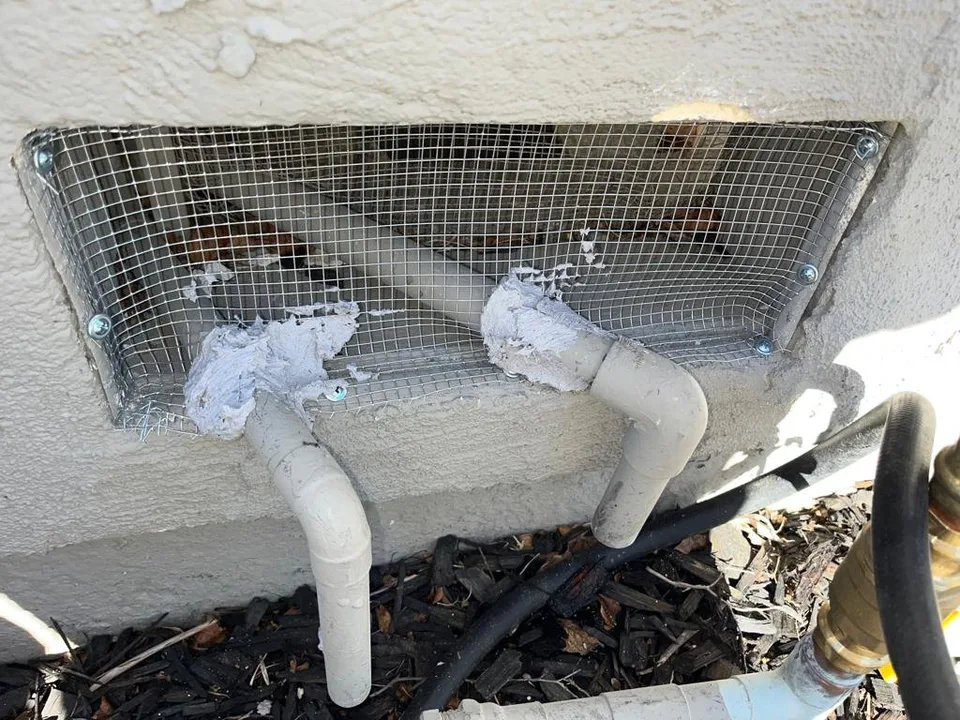
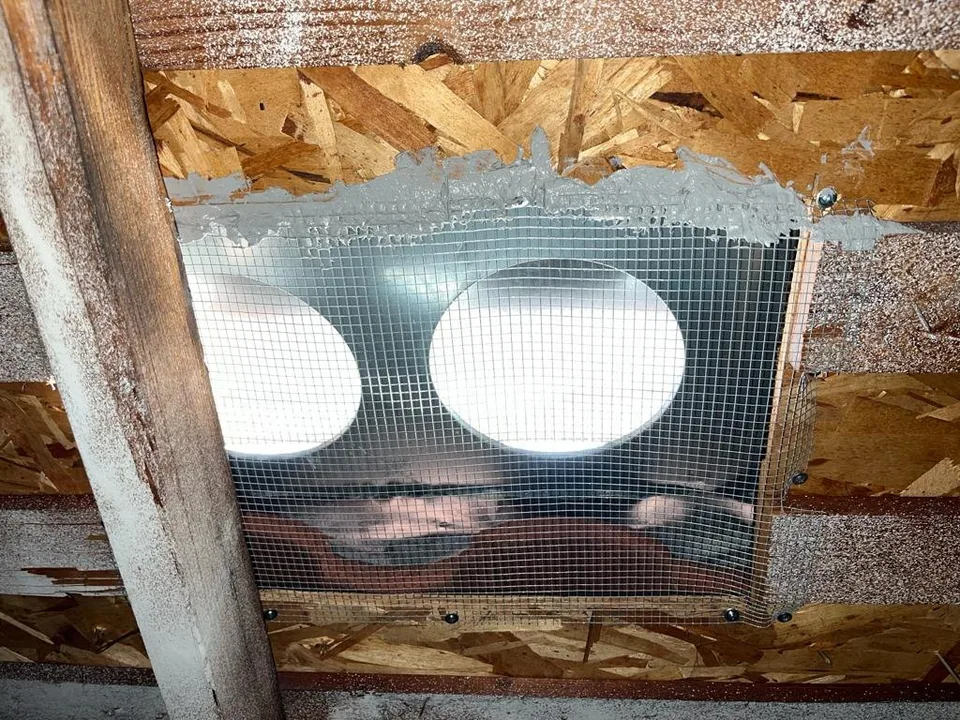
- Seal. We close the gaps at the bottom corners of the garage door, openings where pipes and wires come in, and gaps into the wall cavities. We use galvanized steel mesh, putty and concrete. Why we seal with steel mesh.
- Trap. Snap traps for rats and mice where we see signs of travel, and humane live traps where needed for larger animals.
- Check back. We return at least two weeks after the job to check the traps.
Rodent proofing comes with a warranty. The terms are written in your proposal and on your invoice. See rodent proofing and sealing outside openings.
Why check the garage before you insulate it?
Garage walls and ceilings can both be insulated, but insulation inside the walls gives rodents a warm place to nest. Seal first, then insulate. If rodents have been living in the garage, the area is cleaned and sanitized before anything new goes in. See insulating your garage and batt insulation.
Why now, before winter?
UC says house mice often move into homes in autumn, when nights get colder (UC IPM house mouse guide). A garage door that opens every day is an easy way in. Fall is a good time to close the gaps.
How long does it take?
Rodent proofing usually takes up to half a day when no insulation needs replacing. With insulation replacement, it usually takes one day. You need to be home on the job day, and it helps to clear the path to the work areas of breakable items. The crew takes before and after photos and sends them to you.
What we check in a garage
On garage jobs in Santa Clara and Cupertino, and across the Bay Area, these are the places we look first:
- The bottom corners of the garage door.
- Openings where pipes and wires come in.
- Gaps into the wall cavities.
- Droppings and nests behind stored boxes.
Seeing droppings in the garage? Book a free inspection or call 1-408-664-9888. You get photos of what we find and a written quote the same day, usually within 30–60 minutes.