
Is it worth insulating a garage?
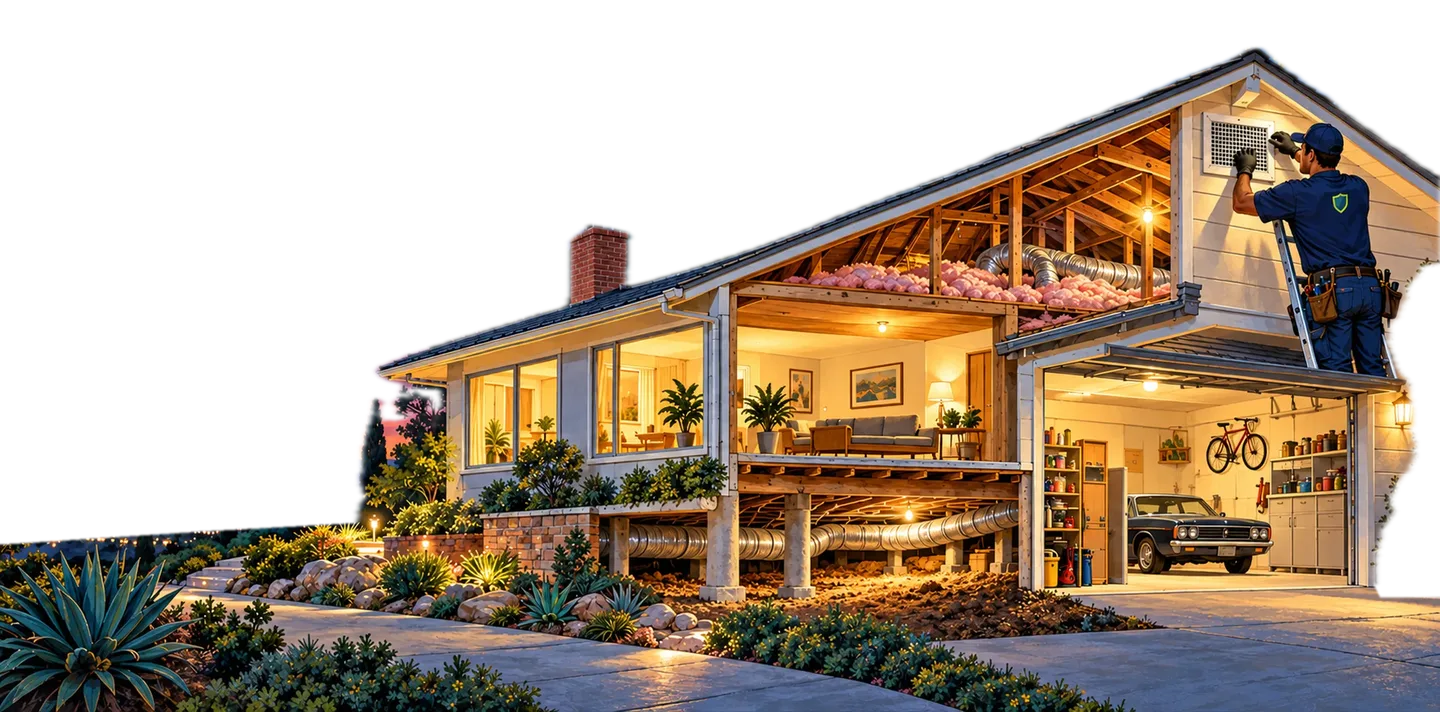
It depends on how the garage connects to the rest of your home. It is most worth it when there is a room above the garage, a wall shared with the house, or you use the garage as a workshop, gym or laundry space.
An uninsulated garage follows the weather. It gets hot on summer afternoons and cold on winter mornings, and that heat and cold reach the rooms next to it and above it. If the garage is only for parking and storage, and nothing living sits above it, insulation matters less.
Where does garage insulation go?
Garage walls and ceilings can both be insulated. The work is all on the inside: in the open wall framing, in the ceiling, and in the wall shared with the house.
- The ceiling under a room above: often the biggest comfort win.
- The wall shared with the house: keeps garage heat and cold out of the rooms next to it.
- The outside walls: helps if you use the garage as a living or work space.
Insulation goes in easiest where the framing is open. If your garage walls or ceiling are already covered, we look at what can be done at the free inspection.
What about the room over the garage?
A bedroom or bonus room above the garage is common in Bay Area homes, and it is often the hardest room in the house to keep comfortable. It sits over an unheated space and often has roof on several sides.
Insulating the garage ceiling under that room helps keep the floor from getting cold in winter and the room from baking in summer. If that room also has attic space beside it or above it, the insulation there matters too. Our post on why upstairs is hotter than downstairs covers rooms like this.
What type of insulation works best in a garage?
Batts. They fit neatly between open studs and joists, and they come in set thicknesses for each R-value.
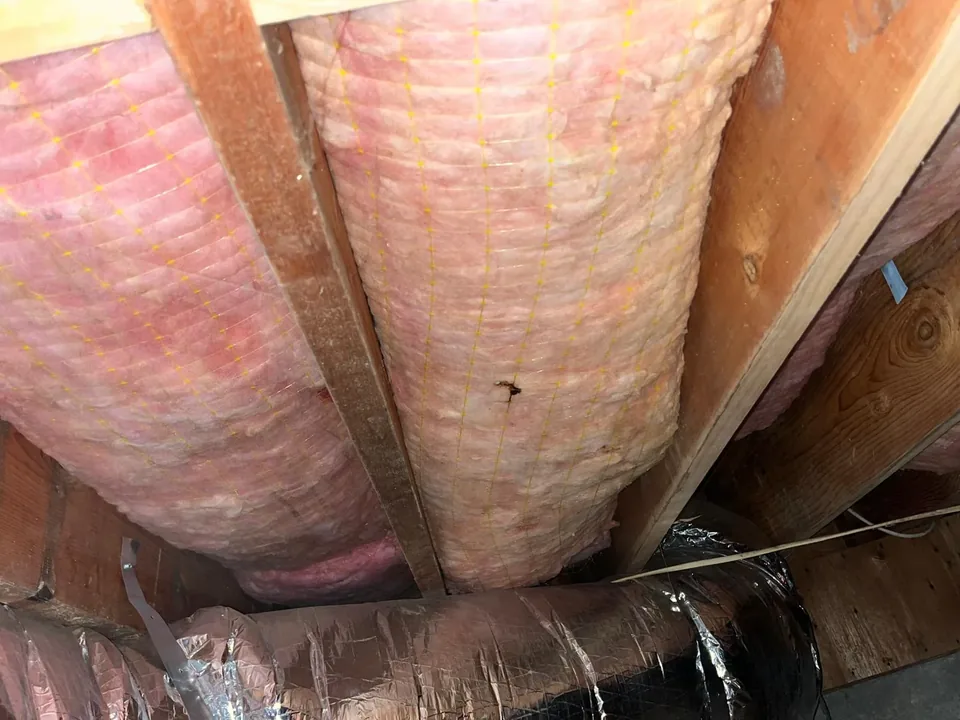
Walls usually get R-13 to R-15. For a garage ceiling under a living space, we recommend the R-value at the inspection, based on the space and what you ask for. We install brands like Owens Corning PINK fiberglass batts, Knauf EcoBatt, ROCKWOOL Comfortbatt (stone wool), and CleanFiber cellulose (our main one) and Mountain Fiber cellulose. See batt insulation.
Should I deal with rodents before insulating the garage?
Yes. The garage is one of the most common ways rodents get into a home, and insulation inside the walls gives them a warm place to nest.
Gaps at the bottom corners of the garage door, openings where pipes and wires enter, and gaps into the wall cavities all need to be closed first. We seal them with galvanized steel mesh, putty and concrete, then set traps: snap traps for rats and mice, live traps for larger animals. If rodents have been living in the garage, the area is cleaned and sanitized before anything new goes in. See rodent proofing.
Does the garage door matter?
Yes. The door is the biggest opening in the garage, and gaps around it let in outside air, and mice.
Insulated walls and a ceiling help most when the door closes well. The gaps at its bottom corners are a common mouse entry, and closing them is part of sealing the garage. Our guide on how to seal rat and mouse entry points shows what else to check.
Can I insulate the garage myself?
Fitting batts into open wall framing is a common DIY project. Ceilings, tight spaces and garages with rodent signs are harder.
Wear gloves, long sleeves and a mask, and don’t compress the batts: squashed insulation works less well. If you see droppings in the garage, follow the CDC cleanup steps before you start, and close the openings first, or the new insulation becomes a nest. Overhead work on a ceiling is much harder to do well alone.
What happens on the job day?
Insulation is a one-day job. Please be home on the job day and clear breakable items from the path to the work area.
The crew covers the path from the front door to the work areas with drop cloths or plastic sheeting, takes before and after photos and sends them to you. Old material and debris go out with us.
Will insulating the garage keep it cool in summer?
It helps, but don’t expect air conditioning. Insulation slows heat coming through the walls and ceiling, so the garage swings less between hot afternoons and cold mornings.
The door, the gaps around it and how often it is open still matter. If you want the garage truly comfortable as a gym or office, insulation is the first step, not the whole answer.
Does garage insulation help with noise?
Somewhat. Batts in the walls and ceiling soften sound passing between the garage and the rooms around it, which helps when someone sleeps above a garage used as a workshop or gym.
What we see on real jobs
In garages around Fremont, Milpitas and Sunnyvale, the same things come up:
- Gaps at the corners of the garage door, with droppings nearby.
- Openings where pipes and wires pass into the walls.
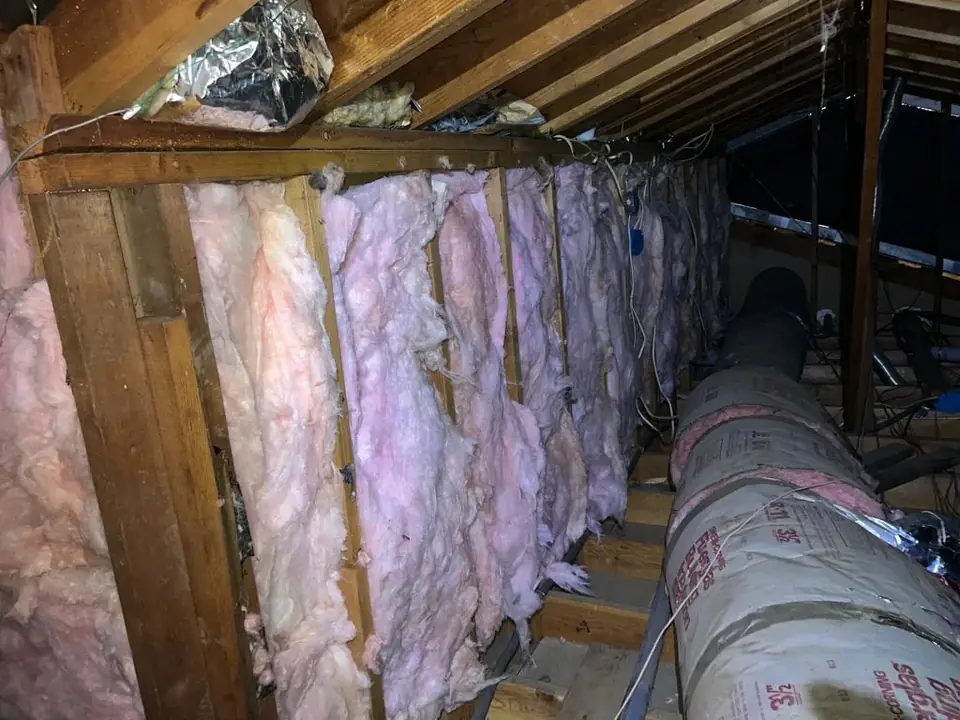
- Old batts that are missing, torn or soiled.
- A room above the garage that never feels comfortable.
We look at the garage together with the attic and the crawl space, because rodents and comfort problems rarely stop at one space. Book a free inspection or call us, and get a written quote the same day.