

Why is my upstairs so much hotter than downstairs?
Mostly because the attic is right above it. On a sunny day the roof heats the attic, and that heat comes down through the ceiling into the rooms below, especially when the attic insulation is thin.
Warm air also rises inside the house, and in many homes the ducts that cool the upstairs run through that hot attic. Put those together and the top floor can stay warm long after the sun goes down.
Is my attic insulation the problem?
It is the first thing to check. Thin, flattened or patchy insulation lets attic heat straight through the ceiling.
Our usual attic target is R-38. Many older Bay Area homes have much less, or have bare spots where insulation was pushed aside by past work or tunneled through by rodents. Our post on how much attic insulation you need shows how to check yours from the hatch.
Could it be the ducts?
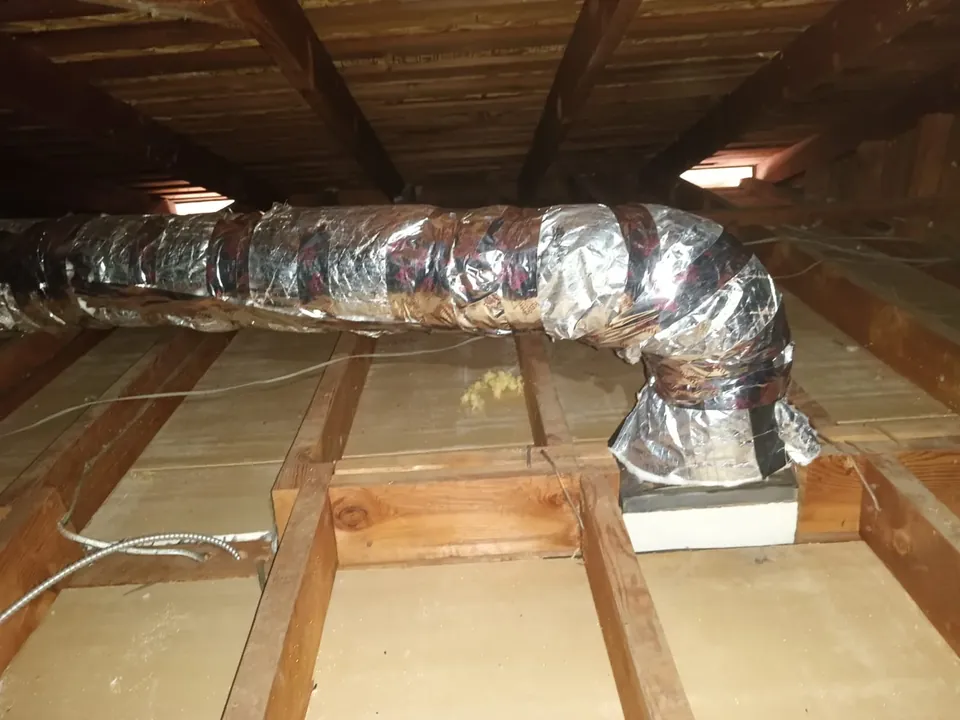
Often, yes. If the ducts that feed the upstairs run through the attic, a torn, crushed or disconnected duct sends cool air into the attic instead of your rooms.
Even ducts in good shape pick up heat in a very hot attic, so the air is warmer by the time it reaches the vents. Weak airflow from the upstairs vents is a strong clue. See weak airflow from your vents for what to check, and air duct replacement for how we replace damaged ducts.
Does a radiant barrier help?
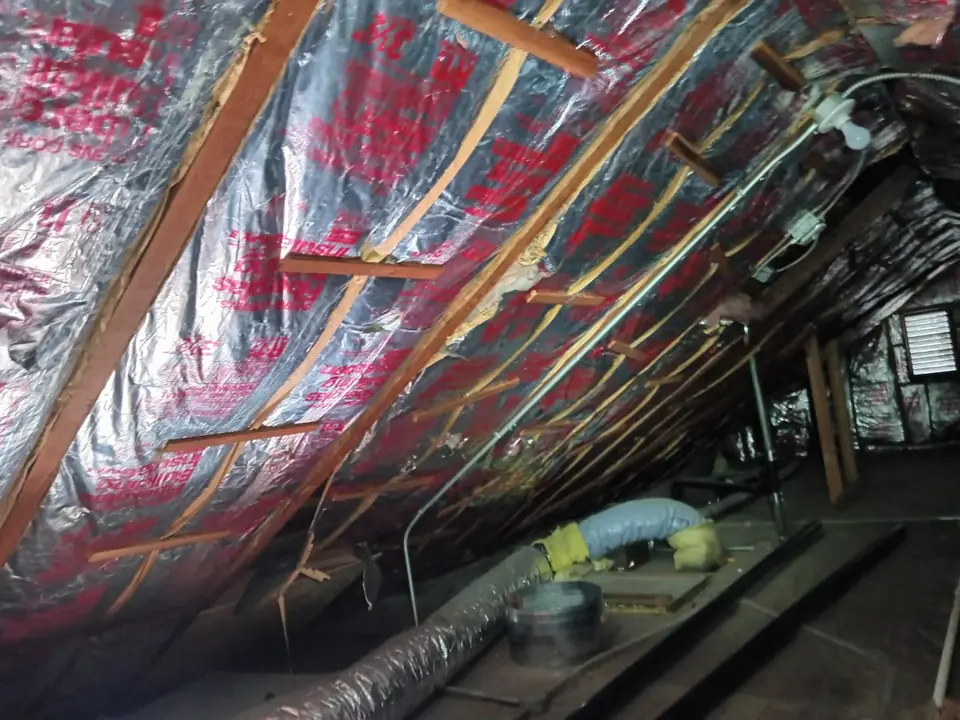
In hot, sunny attics, it can. A radiant barrier is reflective foil under the roof that cuts the heat the roof sends down onto the insulation and the ducts.
It helps most in inland areas with hot summer afternoons, and when ducts run through the attic. It works alongside insulation, not instead of it. Read is a radiant barrier worth it and see radiant barrier.
What about attic ventilation?
It plays a part. Attic vents let hot air escape, and blocked or too few vents can trap heat under the roof.
Vents at the eaves can get covered by insulation or debris over the years. If your attic feels like an oven on a summer afternoon, it is worth having the vents checked along with the insulation. Keep in mind that vents also need to stay screened, so they let air out without letting animals in.
Is it my AC system?
Sometimes. An AC system that is too small for the house, or one that sends too little air upstairs, can leave the top floor warm even when the attic is in good shape.
An HVAC technician can check the system’s size and balance. But it is worth looking at the attic first: insulation, ducts and roof heat are common causes, and fixing them helps whatever system you have.
What can I try today?
A few simple steps can take the edge off while you find the real cause.
- Change the air filter and make sure every upstairs vent is fully open.
- Close blinds on sunny upstairs windows in the afternoon.
- Run ceiling fans to move air in the warmest rooms.
- Feel the airflow at each upstairs vent; a weak one points to a duct problem.
These ease the symptoms. They don’t fix thin insulation or a torn duct, so if the top floor is still hot after trying them, it is time to look in the attic.
How do you find the cause?
By looking at the attic as a whole. At the free inspection we check the insulation depth and condition, follow the duct runs, look for rodent damage and see how hot the attic gets.
We photograph what we find and explain what would help most, with a written quote the same day. We install any type of insulation you want; our most popular is cellulose. Insulation, new ducts and radiant barrier are each one-day jobs.
Is a hot upstairs normal?
A little warmer, yes: warm air rises in every two-story home. A big difference, where bedrooms stay hot late into the evening while downstairs is comfortable, usually points to something in the attic worth fixing.
When the upstairs stays hot, the AC also runs longer to keep up, and the rooms downstairs can end up colder than you want while you wait for the top floor to cool.
Why is the room over the garage the worst?
It sits over an unheated space and usually has roof on several sides, so it gets heat from above and cold from below. Insulating the garage ceiling under that room, along with the attic around it, helps. See insulating your garage.
Can rodents make a hot upstairs worse?
They can. Tunnels and nests flatten the attic insulation, leaving strips of ceiling with little protection, and chewed ducts leak cool air into the attic. If you also hear noises at night, read what that noise might be.
What we see on real jobs
In two-story homes around San Jose, Los Gatos and Fremont, a hot upstairs usually comes with a few of these:
- Thin or patchy attic insulation, with bare spots near the eaves.
- Ducts in the attic that are torn, crushed or disconnected.
- Strong afternoon sun on the roof.
- Rodent tunnels through the insulation.
Many homeowners fix two of these together. Customers who book two or more services get 10% off (one discount per job). Book a free inspection or call us.