
What is the best way to seal rodent entry points?
Close every gap with materials rodents can’t chew through. We use galvanized steel mesh, putty and concrete, and we seal the small gaps as carefully as the big ones.
Rodents gnaw constantly. UC Integrated Pest Management warns that rats can chew through plastic, wood and caulk, so a patch made of soft material only lasts until a rodent decides to test it. A lasting seal starts with metal.
How small a gap do I need to seal?
Anything bigger than about 1/4 inch. UC IPM recommends sealing every hole larger than 1/4 inch to keep out both rats and mice.
The CDC puts it another way: a mouse can fit through a hole the width of a pencil. That is why a gap you can barely fit a finger into still counts. Rats can also chew a small gap wider if the edge is soft.
Where should I look for openings?
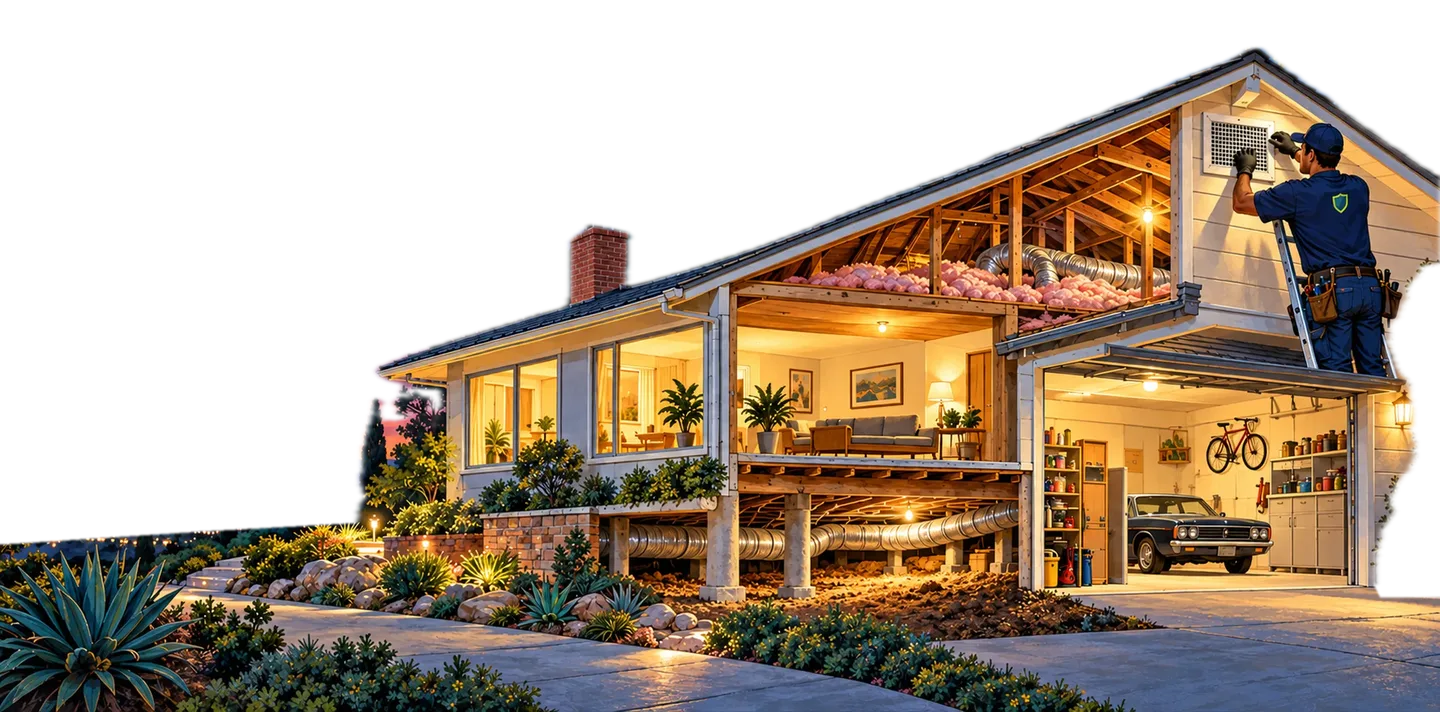
Outside, start low and work up. Inside, check anywhere a pipe, wire or duct passes through a wall or floor.
- Foundation and crawl space vents: torn, rusted or pushed-in screens.
- Where the house meets the ground: gaps at the foundation and under siding.
- Utility entries: gas, water, electrical, cable and AC lines going into the walls.
- The roofline: eaves, soffits, gable vents and roof gaps.
- The garage: the bottom corners of the door and openings into the walls.
- Inside: under sinks, behind appliances, around the water heater and furnace lines.
The CDC lists most of these same places. Our guide on how rats and mice get into your attic explains why each one matters.
How do you seal a vent without blocking the airflow?
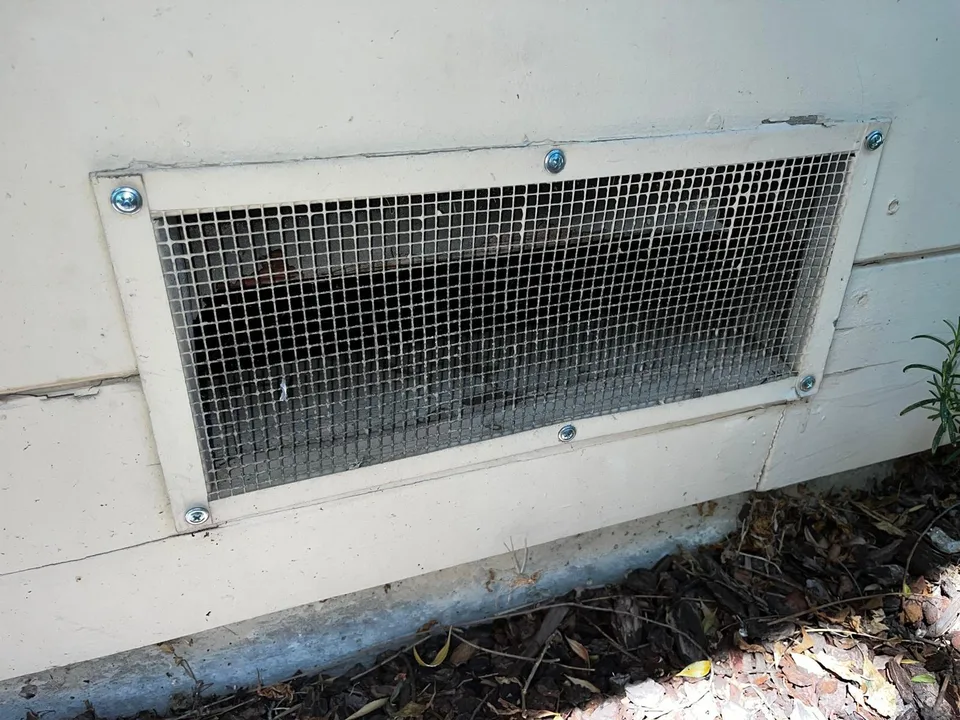
With metal mesh fastened over the opening. Air passes through the mesh, rodents don’t.
UC IPM recommends galvanized 1/2-inch mesh over vent covers and warns never to use lightweight chicken wire, because rats pass through it easily. We screw galvanized steel mesh over each vent and close the edges with putty, so nothing can squeeze around the sides. Boarding vents up is the wrong fix: foundation vents let the crawl space breathe.
How do you seal gaps around pipes and wires?
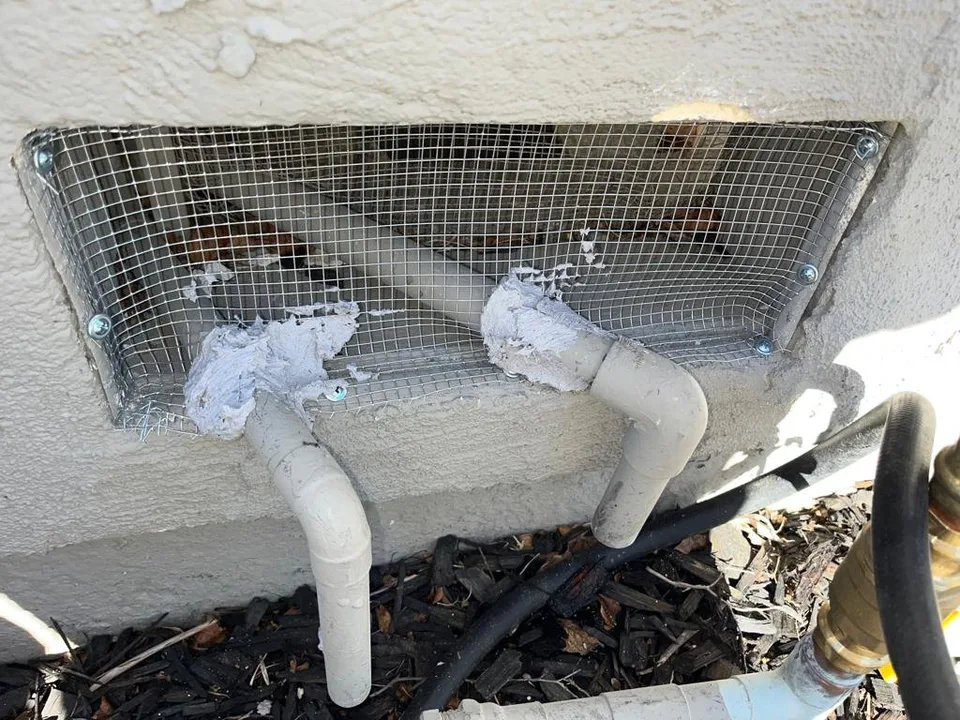
Mesh first, then putty. The mesh fills the gap and stops chewing, and the putty closes the edges around the pipe so there is no space left to squeeze through.
Pipe and wire entries are some of the most missed openings, because they are often behind shrubs, under decks or in the crawl space. A gap around an AC line or a gas pipe can be just big enough for a mouse.
When is concrete the right choice?
For openings in masonry and at the foundation, where a solid fill makes more sense than a screen. Concrete closes the gap for good where no airflow is needed.
Each opening gets the material that fits it: mesh where air has to move, putty for edges and pipe gaps, and concrete where a solid patch is the right fix.
Can I seal entry points myself?
Some of them. Ground-level vents and garage gaps are within reach for a handy homeowner. The roofline, the eaves and the inside of the attic and crawl space are harder, riskier and easier to miss.
The common DIY problems we see:
- Chicken wire or window screen instead of galvanized steel mesh.
- Soft patches, like caulk alone, that rodents chew through.
- The obvious holes closed and the small gaps left open.
- Ladder work at the roofline, which is risky to do alone.
One missed opening is enough to keep the problem going. That is why we check the attic, the crawl space, the garage and the whole outside of the house in the same visit.
Should I seal first or trap first?
Seal first, then trap. Sealing stops new rodents from coming in, and the traps catch the ones left inside.
If you only trap, new rodents keep replacing the ones you catch. After sealing, we set snap traps for rats and mice and live traps for larger animals like raccoons and squirrels, and come back at least two weeks later to check them. More on that in why traps alone won’t stop rodents.
Does trimming trees and ivy help?
It helps, but it doesn’t replace sealing. Branches, ivy and fences that touch the house give roof rats and squirrels an easy path to the roofline.
UC IPM notes that roof rats are agile climbers that travel along utility lines and fence tops. Cutting branches back from the roof and pulling ivy off the walls takes those paths away and makes openings easier to spot. But a rat that reaches the roof another way still finds an open vent, so the openings have to be closed either way.
What we see on real jobs
On inspections in Cupertino, Palo Alto and San Jose, the same openings show up again and again:
- Old vent screens that have rusted through or been pushed in.
- Gaps around AC lines and pipes where they enter the house.
- Openings at the eaves and roof gaps, often near trees.
- Earlier patches made with soft materials that have been chewed open.
We photograph every opening we find, so you can see each one. Rodent proofing comes with a warranty, written on your invoice. See sealing outside openings and rodent proofing, and read why we seal with mesh. Book a free inspection or call us, and get a written quote the same day.